Popular Posts
-
Elegant Themes has been developing WordPress themes for a long time. It has developed lots of popular themes including Divi, Nexus, Fa...
-
Flickr/Laura D'Alessandro See Also I took Harvard Business School's new pre-MBA course online — and it is definitely w...
-
Hello there! My blog post 'Spikes' was published on Sept. 22nd; however, the post before it called 'Flow' was published on...
-
KOZHIKODE: E A Jabbar, a retired teacher and an activist of Malappuram based Yukthi vadi Sangham, has filed a complaint before chief minis...
-
Hi there! There isn't a true e-commerce solution here at WordPress.com. You can, however get a PayPal button. If you get a PayPal bu...
-
OWASP, or Open Web Application Security Project is a non-profit dedicated to spreading information on application security. Their goal is ...
-
Do you love WordPress? Yes, most bloggers and developers love it. This is may be the easiest platform to work. However; There are a...
-
re: iamcharlieg.com There are no monthly payment plans. We are billed annually and have to pay in full at the time of upgrading. re: p...
-
To click or not to click, that is the question. It is both interesting and frightening how such a simple decision can, in a high enoug...
-
Good news for the secure web: WordPress will now encrypt the traffic for over a million more websites that are hosted on its servers. Wo...


Controlling WordPress User Permissions Using User Role Editor

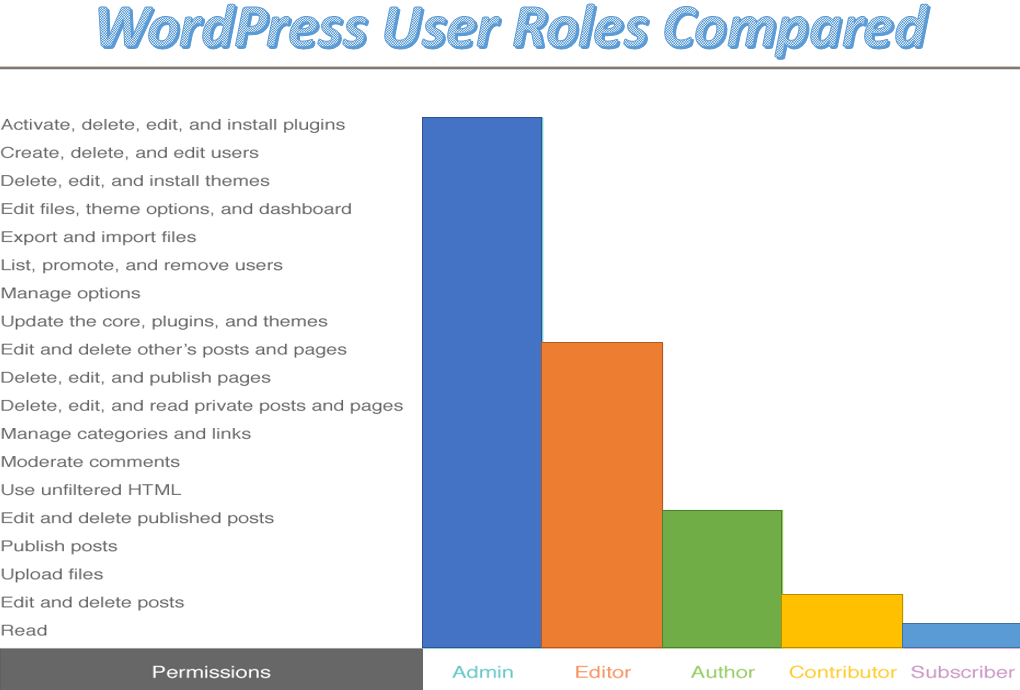
A user role is a set of access rights that a user has. In fresh WordPress installations, there are five default sets of user rights. Each of them has its own predefined capabilities. Each subsequent type includes the capabilities of the previous plus some additional ones. Now let's understand the rights of the standard ones that are available in WordPress by default:
1. Subscriber. The most limited of all default WordPress user types. Has access only to the profile settings.
2. Contributor. In addition to changing profile settings and reading posts the contributors can:
3. Author. In addition to privileges of the contributor the authors can:
4. Editor. This user has all the rights associated with the publication and editing of the site's materials. The settings of the WordPress admin panel and most of the plugins aren't available to this sort of user. And so, in addition to author permissions, the editors can:
5. Administrator. This is the most powerful type. The administrator controls the site completely , starting from access to any content and ending with site settings. Admins can add themes and plugins and delete other users, including other admins.
6. If we are talking about a multisite installation then one more type is added: Super Admin, the one who has access to the administrative network and all the functions of the sites within it.
Why are user rights so important? If you have a lot of authors on your design studio site, it's important to know which permissions to assign to them and how to change the access rights of these users. But here you need to understand that user access rights cannot be managed effectively without using additional WordPress plugins. What if you need to expand the capabilities of some users, give them additional rights? The help comes with a special plugin, which allows you to adjust the rights of existing user groups and create new ones. Imagine this situation. The type "Subscriber" can't download media files, so if you assign such an account type to an invited author, he won't be able to add pictures to his posts. So here it won't hurt to edit this group. You might also need an account that would only allow a person to moderate the comments. So let's see how this plugin will help you to achieve your goals in the best possible way.
Creating and editing user roles 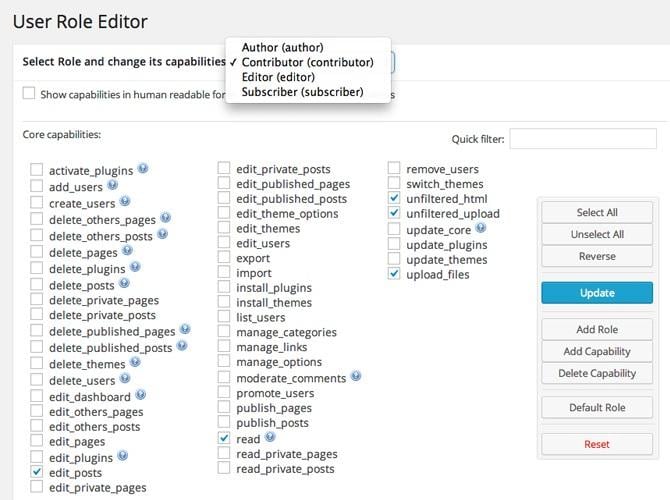
User Role Editor plugin. Its settings are available at the "Users" → "User Role Editor". In the first field you can change the rights for existing user groups. The procedure is as follows:
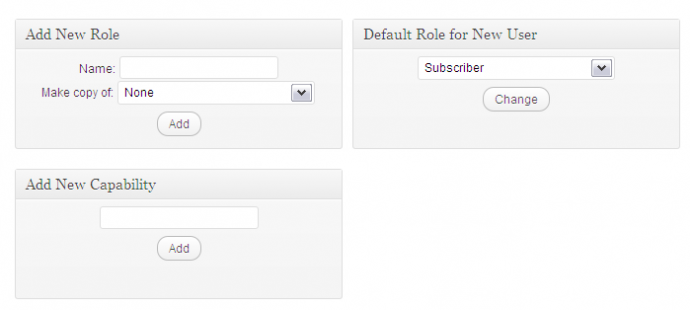
You can also add a new user type. To do this use the option of the same name. Some of the rights can be taken from standard groups. After creating, check the available options and save settings.
In addition, the plugin allows you to adjust the capabilities of each registered user individually. In the "Users" section of the WordPress admin panel, a new "Capabilities" button will appear. Click on it and in the window that appears select the rights that you want to give this person. The free version offers basic functionality, but there's a Pro version that provides functions such as import and export of roles, content distribution, putting content in the shortcode, so that it's displayed only for the specific users, blocking certain meta boxes on pages for records management, etc.

How to Copy Your WordPress Website With Duplicator Plugin
How To Choose The Best WordPress Plugins For Your Site
MalcolmY Freelance Designer Portfolio Free WordPress Theme
6 Down and Dirty Secrets for Great SEO on WordPress
Some Wiki & Knowledge Base Plugins for WordPress Website
Source: Controlling WordPress User Permissions Using User Role Editor
0 comments:
Post a Comment