Popular Posts
-
Elegant Themes has been developing WordPress themes for a long time. It has developed lots of popular themes including Divi, Nexus, Fa...
-
This is part of our "Learn WordPress" series. In this post, you will find out how to properly set up WordPress after creati...
-
It has not only changed the traditional perspective of buyers and sellers, but also revolutionized the entire concept of retail busine...
-
Hello there! My blog post 'Spikes' was published on Sept. 22nd; however, the post before it called 'Flow' was published on...
-
WordPress has rolled out a new version dubbed 4.2.3 of its content management system (CMS) to patch a critical cross-site scripting (XSS) vu...
-
By Myolisi Sikupela: Staff Reporter on 25 February, 2016 WordPress has announced that it now supports Accelerated Mobile Page...
-
LIST MAG WP is a beautifully designed WordPress Theme that is built to be engaging, fast and most importantly boost viral traffic with...
-
Lifegate is a modern looking and elegant WordPress Blog Theme with plenty of straightforward and complete functionalities to build up a pe...
-
The United States government earlier this year officially accused Russia of interfering with the US elections. Earlier this year on Octo...
-
What comes to mind when you hear of WordPress? For a majority of people, blogging comes to mind. To other people who are professionals in we...


The Beginners Guide to WordPress SEO
WordPress is used by millions of people right around the world to setup websites for a variety of applications. While it's popular because it's easy to get up and running and use, it still requires proper optimization in order to really improve your overall search engine rankings.
This guide will give WordPress beginners a basic overview of WordPress SEO to help your website get found online.
This article will cover:
So let's get started!
Your Guide to WordPress Search Engine Optimization Title TagsTitle tags are used in the head section of a web page to communicate your page title better to both search engines and visitors. WordPress generally features a number of different pages which include just to name a few:
Title tags help to boost SEO efforts which in-turn can help to boost your overall rankings. The title tag will tell your visitors what the post is about before they click into it. The title tag is generally seen in search engine results as shown below:

In WordPress, if you've installed the Yoast SEO plugin (which we'll cover later), you'll see an area for the meta description and keyword to be implemented. For optimal SEO, the meta description should include the relevant keyword that's going to be used for the overall post. The title of your post should also feature the relevant keyword for optimal impact. It's important to make your content clear for users, not just search engines.
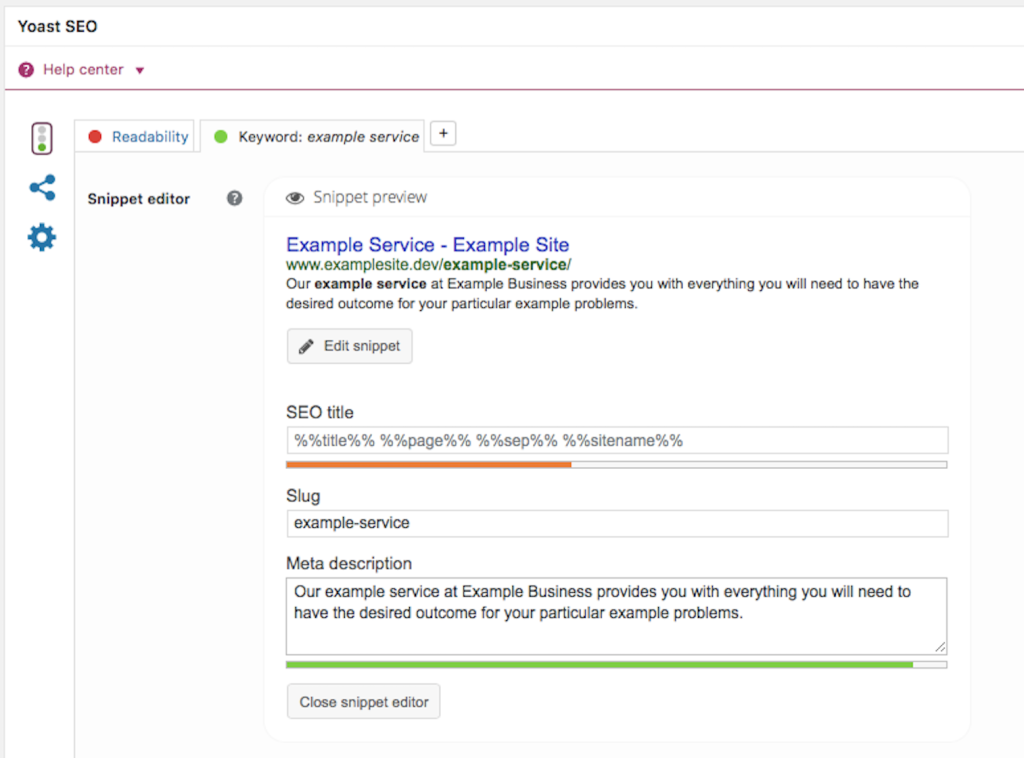
Note the area for implementing the meta description and the focus keyword, this helps Yoast provide you with SEO suggestions and advice for anything you may have missed.
So what's the point of meta descriptions? Meta descriptions are what you see in search engine results. They tell you what the website or page content is about before you enter the website as seen in the images below:
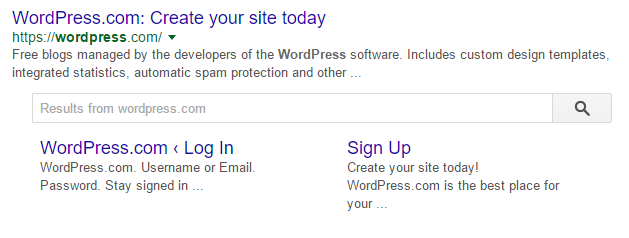
Including meta descriptions allows your WordPress post to be seen by search users. If you don't specify a meta description, the search engines will typically take the first sentence, which might not be ideal and entice users to visit your site. Meta descriptions themselves don't influence search rankings, however they're important for providing a call to action in the search results pages.
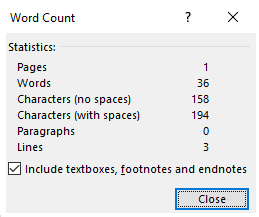
Generally, WordPress will count down the character limit for you when writing your meta description, however if you're using a Word document you can find out the character limit of your meta description by highlighting them and clicking on the word count at the bottom left hand side of the screen.
Permalinks are the URLs of your posts. Permalinks tell your visitors what your link is about before they actually click into it. The words that are used in permalinks will also be highlighted (as with titles and meta descriptions) in search engine results as well when searches are relevant to a search query. In order to change your permalinks all you need to do is:


Permalinks are a great way to provide a clear, relevant structure of your content.
Focus Keyword PhrasesKeyword phrases are specialized phrases which are used to optimize your pages to send more traffic to them. Key phrases are used as the core key phrase that your page will be searched for and ranked for. Think about what you want your site to be found for.
Focusing on keywords and phrases in these areas and implementing it in the Yoast SEO Focus Keyword section can help to boost your WordPress website's overall visibility to both users and search engines. Keyword research will be covered in more detail below.

Image file names and Alt Text are a good way to add meaning to your images to help naturally describe and define your images using relevant keywords for screen readers and search engines. File names and Alt Text can be added when you upload your images, here are the steps:
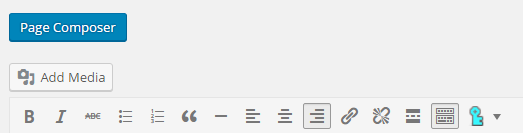
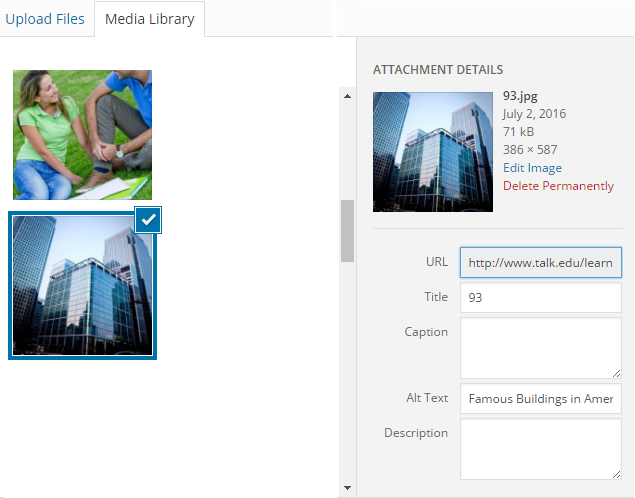
Your image will now be integrated into your content with the additional keyword information.
Internal LinkingInternal linking (or interlinking) is the process of linking one page to another page on your WordPress site. Internal linking holds many benefits, which include:
To link one page (or post, the process is the same) to the next, all you need to do is add a hyperlink or anchor text to a word that relates with the page you're linking it to. To insert a hyperlink, you can follow these steps:
1. Go to the page you're looking to link to and copy the URL of the blog post.

2. Highlight a word or piece of text that you want the page to link to.
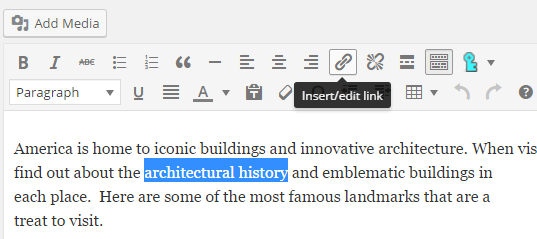
3. Click the link button along the top bar of WordPress editor and paste the relevant link into the link field and click 'Add Link'.
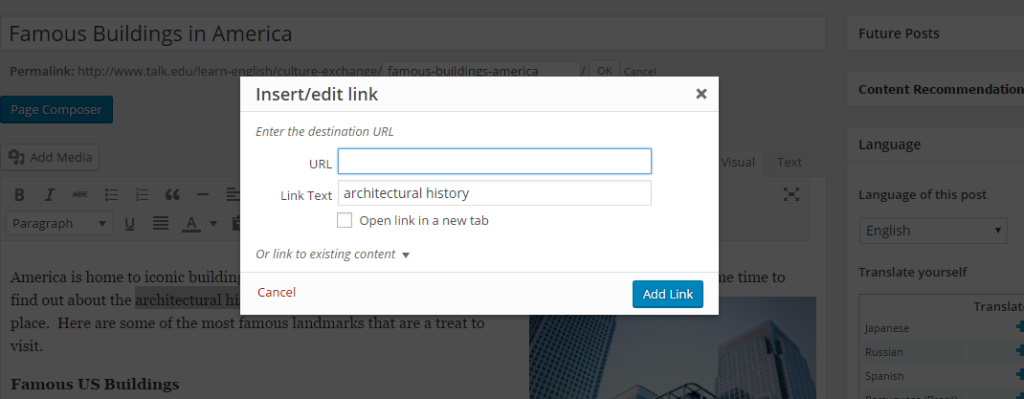
It's really is quite easy to interlink pages and posts in your WordPress content, and best of all it can help your users and benefit your SEO.
There are many ways to achieve the same things in WordPress, explore the content editor and find what best works for you.
Yoast SEOYoast SEO is one of the most popular WordPress SEO plugins, it is free and is used daily by millions of WordPress users around the world. Yoast SEO offers users with on-page analysis, proper social optimization and many other features to help with SEO. The reasons why Yoast SEO is so popular is because:
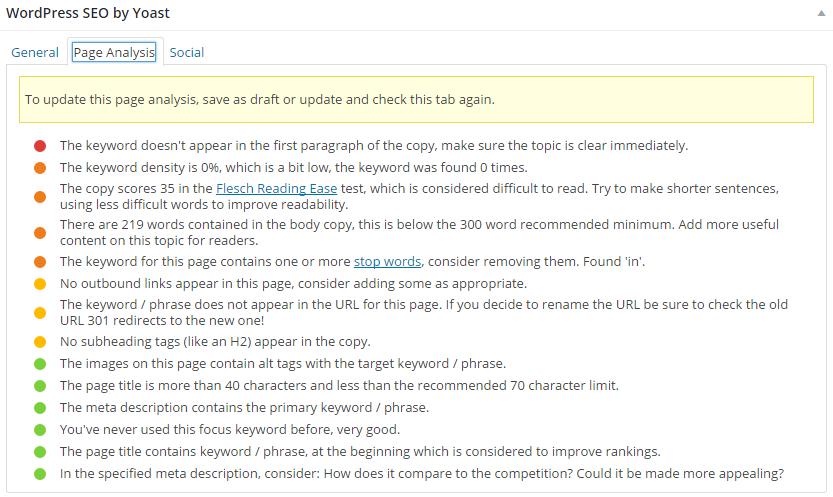
Keyword research is typically done at the start of your project. Keywords are the key words which are used by people to search for items on search engines. When researching the keywords to use for your WordPress site, it's important to consider the following tips:
Examples of the three different types of keywords include:
Use keywords that best match what your page is about. There's no point trying to use the words 'men's clothing' if you're selling young boy's clothing. Always use appropriate keywords for the appropriate pages.
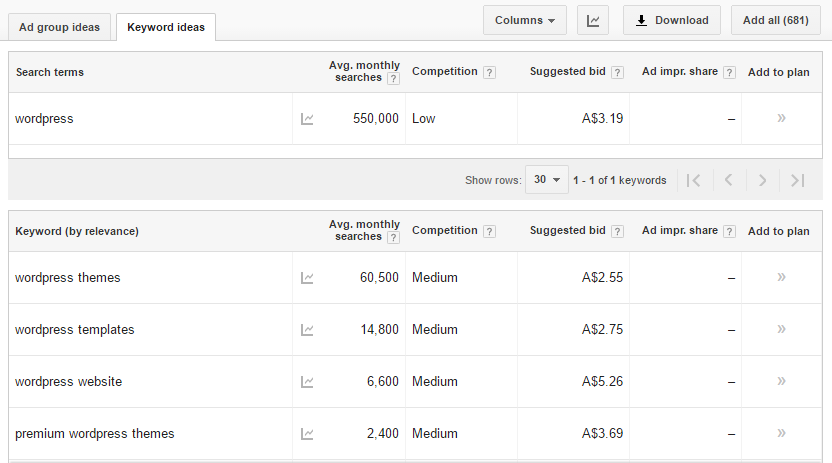
Besides Google Keyword Planner, you can also use the Search Analytics report in Google Search Console to better gauge the keywords people have used to either find your website in the search results or click through to your site. Search Analytics gives you a wealth of keyword data that can be utilized to further enhance your page.
WordPress SEO TweaksTo help improve SEO on your WordPress site you can make a few tweaks to older content that you have previously published across the years. Some areas to tweak include:
ImagesImproving the overall image quality of your blog posts and including Alt Text as suggested above can improve the SEO of your website. When uploading images, they need to be free to use. Sites where you can obtain quality images include Pixabay, ShutterStock, Fotolia, and Stock Photo Secrets to name a few. Some are free to use, while others you may have to pay a price for the images. Here's a great article on finding copyright free images on Flickr that is worth bookmarking.
Title ChangesChanging the titles of your older pages and posts to incorporate keywords can help to improve your overall SEO. Titles should also be changed to become more intriguing and relevant to readers. The more intriguing a title is the more visitors will come to your website. Titles are also important when content is shared on social media, since it's often the only thing people see. Take extra time learning what works for your site.
Page SpeedIf a page doesn't load within 2-3 seconds, many people will abandon your site. To make sure your page loading speed it at peak efficiency you can:
Website performance and optimization is a massive area, we've got a previous articles on SitePoint that dig much deeper:
ConclusionWordPress is a great option to use when setting up a website. By understanding the basics of WordPress you have a higher chance of creating a website that is optimized for users that can also rank well in search engines. If you want to share your WordPress SEO tips, we'd love to hear from you below.
The SitePoint Marketing channel also has a wealth of information on SEO and other marketing strategies. You can check it out here.
Source: The Beginners Guide to WordPress SEO
Plugged In: Analytics Plugins
Welcome to Plugged In, where we take a look at some of the most popular WordPress plugins in various categories. This week, we look into the best plugins for measuring metrics. Want some built-in analytics on your site? Check these Google plugins out. (For more information on WordPress plugins, download our ultimate guide.)
You started your blog to write about something you love and find other people who also love the same thing. Now your site is taking off. You're getting more clicks, viewers, and comments. Though this is exciting, it does come with more responsibility. You will need something to help you manage your new audience.
The best way to do that is to monitor your Google Analytics. See exactly who is reading what, and reach out to even more with these plugins. We have compiled a few of the most popular from the WordPress Plugin Repository. Certainly Google Analytics isn't the only way to manage the demographics of your site, but it is the most popular.

With over 11 million installs, Google Analytics by MonsterInsights is the most popular option for WordPressers. You'll get a login to Google Analytics with a beautiful and easy-to-use dashboard. Look at everything from views on individual posts to bounce rate.
Once you have the power or demographics, you can begin to learn about your audience. MonsterInsights gives you all the tools to get a clear picture of who is reading, and what they want.
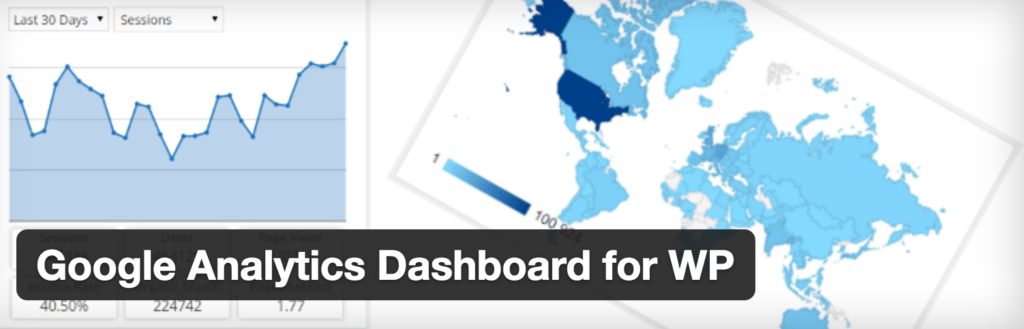
Google Analytics Dashboard for WP lives up to its namesake by creating a beautiful dashboard. You'll be able to see everything in a glance. Look at a map to find the densest populations of readers, or see the ages of your biggest fans.
One of the most useful features is the ability to get a complete report that looks at a breakdown for each page or even post.

Google Analyticator puts the Google Analytics dashboard right in your WordPress dashboard. You'll have everything you need at your fingertips. It also comes with widgets so you can display the information on your admin or to the right of the blog.
See a summary when you log in, or click around to get a better idea of the specifics. Either way, you'll have a clear idea of who is reading your site.
What are your favorite plugins for measuring analytics? Let us know by leaving a comment below. And check out our list of the 10 most popular plugins our customers use on our platform.
Source: Plugged In: Analytics Plugins
Abacus – Responsive Blog & Shop Theme (WooCommerce)
Abacus is a trendy and unique WordPress Blog and WooCommerce Theme aimed at individual sellers and small enterprises. It is based on top-notch web-design and WordPress code quality standards which gives it a refreshing look while keeping up with latest design trends in the industry.
Abacus comes packed with useful features custom post-formats, easy to use theme options using the Customizer, WooCommerce support and much more. The theme comes with free CC Essentials plugin that enhances the feature set of your theme by many folds. It adds the following functionality to the Abacus theme:


Abacus WordPress theme is based on the powerful and widely used Bootstrap 3 framework. The theme uses a custom 24-column grid for more flexibility.
Homepage Masonry Grid & Classic LayoutsAbacus theme's homepage can be displayed in either classic full-width layout or beautiful Masonry grid layout to show your blog-posts. As you scroll, new posts appear with a subtle and beautiful animation.
Abacus theme lets you choose between a paginated layout or a 'Load more…' button to display next set of posts on the homepage. You don't need extra plugins to make this work. Both the options are in-built to the theme. simply select one of them in the Customizer.
Enhanced Post-formatsYes, post-formats are literally on steroids in this theme! You need to see it to believe it. Not only does this theme support Post-formats (Quote, Audio, Video, Aside & Gallery), it takes them to another level. The theme adds extra functionality to make your post-formats really stand-out.
Multiple Quotes as slider with optional background image. When you select the Quote post-format option in the post-editor, the Quote settings appear. Here you can add multiple quotes and even specify the text color of the quote that you think would go best with the featured-image as background.
Gallery as a slider. Select the Gallery post-format and simply paste the gallery-shortcode in the Gallery settings to display your gallery as a slider on home and archive pages.
Display native audio and audio/video from Soundcloud, Spotify, Youtube, Vimeo, etc as featured media. The Audio and Video post-formats, has their own settings offered by the theme. Upload your audio (in formats supported by WordPress) or paste URLs of Youtube and Vimeo videos or add embed codes. The theme displays them as featured content right above your post.
Author-box on posts for Multi-author blogabacus WordPress theme provides author-box on blog posts which is useful for multi-author blogs. It can be turned on/off via the Customizer. It is a great way to show a brief bio of authors along with links to their social network accounts. The theme also lets you add more social networks for authors (users) to display them in the author-box.
Free CC Essentials PluginWhen you install and activate this theme, WordPress will prompt you to install CC Essentials plugin. This plugin is developed by us to add various functionality to this theme. This plugin is required for this theme to work optimally.
CC Essentials plugin adds the following modules / functionality to the theme:
Setup and manage the settings of your site with the Abacus Settings section in the WordPress admin area and the theme customizer located in Appearance ? Customize. It is very intuitive and well-documented. Every option has an explanation beside it. Using the Customizer, you can upload your logo, change the homepage intro and theme skin, setup breadcrumbs, enable Facebook comments or Disqus comments and various other settings related to the theme.
Disqus and Facebook comments moduleAbacus's theme customize panel lets you quickly switch between native WordPress comments and third-party commenting systems like Disqus or Facebook comments. These are quite popular and many successful blog authors use them. You can too! Please note that the theme does not import/export comments to these services.
WPML / Translation readyAbacus WordPress theme supports localization and can be translated to any language using tools like WPML. The theme package is provided with .pot/.mo translation files located in the 'languages' folder in the theme's root.
Key features round-upSource: Abacus – Responsive Blog & Shop Theme (WooCommerce)
11 Ways to Speed Up WordPress Blog and website?
Is your WordPress blog not speedy and you want to speed up wordPress blog?
Is your WordPress blog or website taking to much time to load?
Are you losing a large number of visitors and clients because of the slow speed of your WordPress website?
Then you have dropped to the right place and I will be sharing with you all the tips and techniques which can help you to speed up your WordPress Blog or WordPress website.
Before I start explaining that how can you increase the speed of your WordPress website, you should know that why it is important to increase the Speed of your WordPress website.
Here are points that why you must increase the Speed of your WordPress site:I will try to share all the ways to check the speed of any website. For checking the speed instantly I use three tools and there is also a tool which takes weeks to show the speed of your website. Now these tools are:
The first three tools namely GTmetrix, Google Page Speed insights and Pingdom website speed test can be used to check the speed of any website instantly. Whereas Alexa Toolbar takes a little time to tell the speed of the page, it not only tells the speed but also helps to check the Global and Alexa rank of any website. You can check a screenshot below for the same.


There many factors which must be kept in mind to speed up your WordPress website. And I will try to share all which have helped me to increase the speed of my blog and other websites.
1.Choosing a Right web HostingIt is important that you choose a right web hosting for better speed. If you have just started your blog or wanting to start a new blog or website then you can start with cheap plans or go with shared hosting. Because at startup you will not be getting tons of traffic so a cheap plan would work better till you start getting loads of traffic. If you still haven't brought the hosting and domain then you can read the post about choosing a right web hosting for your website or blog.
Keep in mind that once your blog or website start getting loads of traffic then you have to move to a higher web hosting plan or dedicated hosting plan which will keep the speed of your website good enough. Although, if you are looking for a cheap web hosting plan then I recommend you read my about "How to get cheap web hosting from Godaddy?"
More importantly, while buying the hosting from any company keep in mind that the resources provided by the Hosting provider must be sufficient for your WordPress Blog or Website.
2.Selecting a best caching PluginThere are many caching plugins available, and you know that we could use only one. There are plugins like WP Super cache and W3Total cache which can be used free as well as provide the premium services. You can choose one plugin from both of the above, I have a good experience of using both but at the end, I switched to W3Total cache.


And below are settings with W3Total cache, you must do to speed up WordPress site.
To speed up your WordPress site using the W3Total cache, you can cache your pages, Mainly your front page. In the below image you can see that I have enabled the options to speed up WordPress site. In this can also cache the categories, tags, and comments. This helps the browser not to grab your content again and again from the main server and results in better speed.


As from the name itself you would have understood that minify means to make the HTML, JavaScript and CSS codes smaller so that you WordPress site can run faster.
In the below image you can see that I have enabled the options of HTML and XML. You can also check those boxes which I have checked.

Now, This below image is for doing the settings with JavaScript and CSS.
Minifying the HTML, CSS and JavaScript make it possible for the server to take less time to load.


For the object cache, you can check the setting below only and Sometimes you get these by default.


In the W3Total Cache, I think it is one of the most important settings and And I have taken three screenshots which will help you to speed up WordPress site.


When you will check your website's speed at sites like GTmetrix or Google page Speed test then you will be asked to solve the above list of options. If you are not using any caching plugin or have not done any setting for speeding up your website using .htacces file then I am sure that Gtmetrix is going to tell to fix the above thinks in the image.
So, here you must check the
Last Modified header Set Expires header Set Cache-control header Enable HTTP (Gzip) CompressionNow the when you do the Gzip compression, it makes the essential file smaller and that results in less bandwidth usage by your website. This can be done both by editing the code in the .htaccess file and as well as in the W3Total cache plugin. As you can see in the above screenshot taken from W3TC plugin.
Set Entity Tag
The below Two Images are also doing the Setting in the W3Total cache for the browser cache.


If you want your WordPress website to be fast then before selecting a theme for your blog check their speed on the sites like Gtmetrix. I know that design and user experience are a must have a factor to have the good blog but the speed is also a ranking factor in the Google SERPs. I will recommend you to go with a paid and well-developed theme instead of using the free theme which has slow speed.
I have always recommended themes from MyThemeShop. Even I have written a review about the MyThemeShop's themes and Plugins which will help you to choose a theme which loads quickly. One of their most popular and dependable themes is the authority theme which is really worthy to be used.
4.Optimizing the Site's DatabaseOptimize the database of your WordPress Site using a simple plugin. If you have optimized database for your WordPress site it will surely speed up. I can even make it easy with you by sharing some of the database optimizing plugins.
But the Plugin that I am using is WP-optimize. It simply allows me to optimize my WordPress database without using any queries. I can clean up my database without going to PhpMyAdmin and optimize all my database tables.
what exactly these plugins helps to do is optimize your database, repair, and backup your database. More importantly, it drops the empty tables and only runs the selected queries.
5.Compress Your ImagesThe larger the size of the images the more bandwidth it will occupy and also more space is required. So we can use some plugins to make the size of the images smaller than the actual size. There are two plugins which I will recommend, WP Smush and EWWW Image Optimizer. Both plugins are good enough but I been using WP Smush for a long time and haven't faced any issues using it.


The WP Smush optimize all the images in your WordPress dashboard. The best thing is that it maintains the quality of the image and decreases the size of the image. The size decreases from Mbs to Kbs. And every time you upload a new image into your WordPress site, it automatically optimizes it and decreases the size of the image but keeping the original pixels and quality of the image.
6.Use CDN (Content Delivery Network)CDN stands for content delivery network. Now, the CDN helps to deliver the static files of your website to be accessed faster by your visitors from a server which is closer to them than your actual server. Thus making the speed up of your WordPress site faster than the normal speed of your website. It ensures that the visitors of your WordPress blog or website access the cache of your website rather than accessing your website from the actual servers. And cached page opens up much faster than the pages requested from the main servers.


Almost all the websites that have high traffic use CDN for their static pages. This helps the site owner to save their bandwidth usage and it also helps in decreasing the load time of the website. You can use MAXCDN for your WordPress Blog or website. many of the Bloggers and web master's prefer using it. They have very good plans to go with and helps you to rank your website on Google with Better speed.
Another amazing function of the CDN is that when the servers of your website get down due to some unknown reasons, the content delivery network helps keep your website up and running. Actually, it shows the visitors the cached version of the website. Which could save you from the drop in ranking, because a website down for a long time could result in a drop in ranking?
7.Diagnose all your pluginsPeople often don't care about the plugins they are using, What they want is proper functioning instead of a good speed. Even I was not checking the performance of my plugins but there were plugins which were responsible for decreasing the speed of my blog. I was having like 30 plugins installed and it was difficult to deactivate each plugin every time and check which plugin was decreasing the Speed of my blog. So, I did some Google search and Found some amazing plugin which could perform the same function for me in a matter of minutes instead of checking each and every installed plugin manually.
So, below are the two plugins which you can also use to diagnose your plugins.
It is free plugin developed by Godaddy. I am using this plugin for a long time. It actually searches the plugin which slows down the speed your website and also creates a performance report for the WordPress website. Once it clears that which plugin is responsible for decreasing the load time you can remove that plugin and find similar kind of plugin to speed up WordPress site.


This plugin is also a good one. It offers two functions.
It changes the order of the plugins to manage the load time and disables the plugins according to the post. It gives you the opportunity to disable some plugins on your pages and post which makes it better.
8.Use a Good Sharing Plugin (which loads faster):Using a good sharing plugin for your WordPress site is important these days because Google also counts the number of social shares as the ranking factor. But you must use a light weight plugin which loads faster and helps your visitors to share your content to a large number of social sites. There are two plugins which are good enough and even I am using them for my WordPress sites and I have also mentioned them in my post about the essential WordPress plugins.
AddToAny Share Button:
This is one of the most amazing plugins which I have used till now. It provides faster services. I have also checked it with the P3 (Plugin Performace Profiler) plugin and it shows that it is good enough to use, so I have given my first priority to this sharing plugin. But I would suggest you to not to use this plugin as a floating sidebar widget on your homepage because it then decreases the speed instead to speed up WordPress site. Use these sharing buttons on the top or the bottom of your posts and pages.
You would have noticed the sites using floating social icons loads too much and have slower speed as compared to the sites which don't use the third party plugins for floating social icons.


I know that there must very few people who will be using hotlinks. let me first explain you that what Hotlinking is?
It is like when some other sites are using your infographics or content on their website but the link points to your site. which means the other websites are using your server instead of their own. I know it is a good linking technique. But if you are losing your bandwidth and site speed then it is not good at all.
Although, it is a good technique to get some quality links to your site so there is a solution for that too. There is a tool which you can use to protect your bandwidth. This tool can help you to generate a code which you can add to your .htaccess file and speed up WordPress.
And after adding the code you can ensure yourself that the hotlinks will not affect your WordPress site speed. And will provide a speedy wordPress site.
10.Turn off your Pingbacks and trackbacksTrackbacks and pingbacks help us to know if someone has linked us or not. Although, trackbacks are manual and pingbacks are automatically done. All WordPress users know that trackbacks and pingbacks are automatically sent to the comment moderation section. And sometimes in the spam folder, but once you start getting in a huge mass then your wordPress site can be affected. If it happens and it looks like that Pingbacks and tracks are affecting the speed of your website then you must disable them. And you can do that from the WordPress section, easily.
11. Use Lazy Load plugins For your Text, Videos & ImagesLazy load is an amazing plugin which allows the images to load after a little while, just after the content of your WordPress site is loaded. It also makes sure that when a person scrolls down the post or page, only then the images loads. If your sites images are loading with your content then you can install this plugin to speed up WordPress.
It is a paid plugin, not all free. There you can use a free version Unveil Lazy Load to decrease the loading time of the images.
If you want to use the same feature for the videos and text then there are two different plugins which you can use to speed up WordPress site. For videos, use Lazy Load for Videos and for text use Lazy Load XT
Finally What I want to say:The above tools and plugins that I have shared will surely help you to speed up your WordPress site. Although I have shared about all the free plugins but if you have money than you can use their pro features to get more benefits from them.
Once you have done all the above things that I have shared in the above post to speed up WordPress, then again check your website at the sites like Gtmetrix and Pingdom to check if the speed of the website has increased or not.
If you do think that I have missed any point then please let know through your comments. And would also love to know your opinion about the post.
Source: 11 Ways to Speed Up WordPress Blog and website?
Integrating squarespace professional website + Blogger blog into single wordpress site
Hi, I currently have a separate squarespace professional site and a Blogger blog, and would like to integrate them into a single wordpress site/blog. How can I go about doing this?
The blog I need help with is urbankitchenapothecary.wordpress.com.
Source: Integrating squarespace professional website + Blogger blog into single wordpress site
WordPress for Android 5.7 Adds Path to Upgrade WordPress.com Plan

WordPress for Android version 5.7 was released today with a new "Plan" screen under the site menu for WordPress.com users. This section details the differences between WordPress.com's commercial plans and includes a link for users to manage and upgrade their plans.
Previous releases have added user management and the ability to invite new users. Version 5.7 builds on this and allows WordPress.com users to manage their followers and viewers from the the "People Management" screen.
If you use the mobile app to manage self-hosted WordPress sites, you may have noticed the lack of functionality as compared to WordPress.com sites. The app doesn't allow self-hosted site owners to manage themes, site settings, or users. This gap is becoming more pronounced with each release.
Why Self-Hosted WordPress Sites are Lagging in Features Compared to WordPress.com SitesI spoke with Maxime Biais, one of Automattic's mobile engineers, to find out why the app seems to be charging forward with new features for WordPress.com users and leaving self-hosted users behind.
"'People' is on the roadmap for self-hosted sites, but we are waiting for some changes in WordPress (core) before we can implement anything," Biais said. "That might take some time if we wait for the WP-API plugin to be merged in core.
"For 'Themes,' there are other issues with browsing (and installation) and we're not excluding it but it's not really on the roadmap."
As the fate of the WP REST API project is still up in the air, it's difficult to gauge when self-hosted sites will have feature parity with WordPress.com. In the meantime, the app's engineers are working on getting more features in for sites that have Jetpack enabled.
"User management will be enabled for Jetpack sites (and other features too)," Biais said. "We're currently rewriting the network layer of the app and this will bring good stuff for our Jetpack users."
Biais said that the network layer rewrite is a large task that will come with some major infrastructure changes in the app. He could not provide an ETA but said they are aiming to have the first steps of this new network layer integration completed by the end of this year.
Automattic's WordPress for Android team includes approximately 10 developers, some of which are working on iOS and other apps like Simplenote. I asked Biais how the team decides on the roadmap and goals for the app.
"For the roadmap, it's variable, we usually decide by consensus," he said. "We're also looking at users' feedback and decide to work on some features when we see a trend. For instance, we've seen more and more sign in errors and we decided to work on a better tool to detect the xmlrpc endpoint and a 'sign in by email' feature for WordPress.com users."
WordPress for Android is an open source project that is open to contribution, but Biais said the team rarely receives any contributions due to the complexity of the app.
"Code complexity doesn't help and the fact we support different APIs (WP.com REST API, XMLRPC, and soon WP-API) makes things even harder for a contributor," he said. "This new network layer will hide that complexity and makes things easier but I'm not expecting many more contributions."
Self-hosted WordPress users who don't appreciate the proliferation of WordPress.com-only features packaged with the app, such as the reader and the commercial upgrade path, have no other option than to fork it. There is no way to turn off the non-publishing-related features that Automattic's employees are building into the app.
I asked Biais what percentage of the app's maintenance and development is devoted to WordPress.com features, as opposed to the overall improvement for all users.
"It's hard to say, some features take most of the time – the editor for instance – and benefit WordPress.com and self-hosted users," Biais said. "Other features are specific to WordPress.com: Reader / Notifications.
"Some features take much more time for self hosted sites: the sign in screen, for instance, and the network layer to support all kinds of self hosted installs (self-signed SSL, HTTP auth, misconfiguration, PHP warnings, etc."
When asked whether the commitment to support self-hosted sites is the same as WordPress.com sites, Biais clarified the team's approach when a feature is not available for both.
"WordPress.com features are not prioritized over self hosted," he said. "When we can implement things for both we do it, but when we can't (like when we don't have the XMLRPC endpoint) we do it for WordPress.com and usually ask Core to do the changes so we can implement the same feature for self-hosted users."
Biais cited the Site Settings feature as a good example of this. It's currently a WordPress.com-only feature. Although the code for self-hosted sites is ready, he said it is not yet wired into the app because the team is waiting on a certain ticket in core to be fixed.
I asked Biais if there was a trend of users who wanted the open source WordPress app made purely for features shared by both WordPress.com and self-hosted users, if the team would consider removing features like the Reader.
"If it was a majority of users, I guess we would think about doing it," Biais said. "Or maybe find a way to build a special version with only features shared by WordPress.com and self-hosted users. That's doable but it's a big task."
Biais said they have only once had this request from the manager of FDroid, a catalog of free and open source software apps for Android. Otherwise, the team has not received much feedback from users wanting major changes to the app.
As the app contains many WordPress.com features that are not central to the core publishing experience, some have suggested that it be renamed "WordPress.com for Android" for clarity. According to Biais, the team has examined the possibility of splitting it into two apps.
"We considered having both WordPress and WordPress.com apps, but we rejected this because it doesn't make it more clear," he said. "It's probably even more ambiguous when someone searches the Play Store for "WordPress" or "Blog" and finds both WordPress and WordPress.com apps."
For now, self-hosted users should recognize that issues with WordPress core and the lack of the WP REST API in core are holding the app back from offering the same features that WordPress.com site owners enjoy. Jetpack-connected sites should see more features once the network layer rewrite is in place. The team has a roadmap that includes user management and site settings for self-hosted sites, but users will need to wait for future releases of WordPress to make it possible.
Like this:Like Loading...
Related
Source: WordPress for Android 5.7 Adds Path to Upgrade WordPress.com Plan
Nictitate Lite Responsive Fullscreen WordPress Theme
Nictitate Lite Responsive Fullscreen WordPress Theme is perfect choice for freelancer, creative agency, photographers and videographers alike or any kind of business to show off works/portfolio. It has a completely unique design, well-structured code, easy to customize with responsive design. The WordPress Theme is compatible with almost all device from desktop to mobile. Nictitate Lite suited for users with no coding knowledge as well as developers. You can define unlimited sidebars for widget areas, and with powerful custom widgets, the theme provides you more flexibility and ease-of-use for your site.

RESPONSIVE LAYOUT
Nictitate is 100% responsive can automatically adjust and perfectly adapt to all devices m order to provide you an optimal viewing experience.
LAYOUT CUSTOMIZATION
With Nictitate you can manually create expected number of layouts resize the layout of all pages in your site and/or place them anywhere as you want thanks to our Visual Layout Manager.
HTML5 AND Css3 TABLELESS DESIGN
CUSTOM WIDGETWith Nictitate WordPress Theme you can manually create expected number of layouts, resize the layout of all pages in your site and/or place them anywhere as you want thanks to our Visual Layout Manager.
VISUAL SHORTCODE GENERATORA number of custom shortcodes creating options have been integrated into the theme such as button, table layout columns, progress bar alert box and many more, ready to give your site an impressively beautiful user interface.
LOCALIZATION SUPPORTA number of custom shortcodes creating options have been integrated into the theme such as button, table layout columns, progress bar alert box and many more, ready to give your site an impressively beautiful user interface.
UNLIMITED SIDEBARA number of custom shortcodes creating options have been integrated into the theme such as button, table layout columns, progress bar alert box and many more, ready to give your site an impressively beautiful user interface.
EASILY ADDING GOOGLE ANALYTICSA number of custom shortcodes creating options have been integrated into the theme such as button, table layout columns, progress bar alert box and many more, ready to give your site an impressively beautiful user interface.
Free Fullscreen Theme Features:Demo Download
Source: Nictitate Lite Responsive Fullscreen WordPress Theme
School Blog
Hi... we are trying to make photos taken at events open to parents but need them to read the school photo policy first before accessing the photos. Is there any way to make this mandatory???
The blog I need help with is raphaelhouseblog.wordpress.com.
Source: School Blog
Disqus Adds Support for Akismet
Last week Disqus announced that the company has partnered with Akismet to combat comment spam. The blog comment hosting service processes 1.8 million comments per day and approximately 15,000 (0.8%) are spam.
"It only takes one spam comment to create an eyesore in a lively discussion so, in a sense, stopping all these varying spam comments can be like 'finding a needle in the haystack,'" Disqus Product Support specialist Danny Matteson said.
In an effort to better identify spam comments, Disqus has integrated Akismet with its network-specific features, such as reputation, flags, vote, comment history, forum moderator actions, trusted user lists, and user profiles. Based on comments on the post, which actually include spam, the integration still requires some work. Some Disqus users are wrongly being marked as spammers and known spammers who have been flagged numerous times continue to freely post around the network.

Two years ago, Disqus started experimenting with advertising in the form of "Sponsored Comments," despite already promoting sponsored content on other parts of the page. Users could not turn the ads off without contacting Disqus support. In a post on his blog, Automattic CEO (and creator of Akismet) Matt Mullenweg called out Disqus' Sponsored Comments as spam:
Translation: It's not comment spam if we're getting paid for it.
Disqus quietly discontinued Sponsored Comments after a negative reaction from its community, and the post announcing the experiment has since been unpublished. Automattic and Disqus are now on more friendly terms.
With the help of Akismet, the Disqus team has decided to make tackling spam a priority for its users:
At Disqus, we take combating Spam seriously. We hate the little buggers just as much as you do because spam distracts you and your audience from creating a great community. And let's be honest, you don't want to waste precious brain waves on identifying and removing spam.
The Akismet blog, which has been quiet since mid-May, did not share any details about the partnership. Although the product was originally developed as a plugin for WordPress, its public API is open for developers who want to implement Akismet for other systems and platforms. In addition to the handful of WordPress plugins that integrate Akismet, the open source community has built modules for Drupal, Joomla, Expression Engine, Mediawiki, Moodle, vBulletin, Magento, Open Cart, and many more.
Like this:Like Loading...
Related
Source: Disqus Adds Support for Akismet
How To Start A Blog – In Less Than 5 Minutes
How to start a blog or website in 5 minutes with WordPress.

After publishing the post on how I started blogging full-time, I've been receiving a ton of comments and emails, all asking the same question:
How do you start a blog & make money blogging?
Luckily, setting up a blog is really easy, even if you know absolutely nothing about computers or how to set up a website. I'll walk through how to start a blog here, step-by-step, and please feel free to leave a comment if you run into any issues or have any questions at all. I'll try to answer as quickly as possible!
How much money can you make from a blog?
I know some bloggers who are making over a million dollars a year, just from blogging! Even some food bloggers are making $500,000 dollars a year or more from their blogs. While I don't make anywhere near this amount, I also don't do any amazon affiliate advertising or have in-photo ads, subscriptions, or popup ads on my site. I consider the money an added bonus to something I love and was doing even before I knew you could earn a living from it.
If you want to earn money by blogging, I'd recommend signing up for a self-hosted WordPress blog. I made the mistake of starting on a different platform and ended up having to switch over to WordPress because it offers you so many more opportunities. For hosting, Bluehost is the only hosting service officially recommended by WordPress, and it's what I used when I started my own WordPress blog.
STEP ONE: Set Up Your WordPress Hosting
Click here to start, then you'll see a green button that says "get started now." Click that button.
Select your plan – For most beginners, the basic plan is fine. Click the green "select" button on the basic plan.
STEP TWO: Choose A Blog Name (the fun part!)
Think up any name you want, and see if it's available. Once you're happy with a new blog name, fill out the form on the "create your account" page and choose the plan you want. I'd recommend going with the 36-month plan because it's the best value, and you can also get a refund at any time if you change your mind about blogging. So really, there is no risk!
You can uncheck all the extras – although you might want to keep the privacy box checked. The package includes both your hosting (which you need if you want to run ads on your site and make money) and your first year domain registration for FREE!
(This saves you $18, which is what it normally costs to register a WordPress domain.)

STEP THREE: Set Up WordPress To Get Started Blogging
Look in your inbox for a welcome email from Bluehost, and click the link in that email to go to your cPanel. Find the section in the cPanel called "MOJO Marketplace" and choose "One-Click Installs."
All you have to do here is click the WordPress icon, then click the green "Start" button.
Choose your blog domain, and click "Check Domain," then show advanced options and set up your own username and password. Make sure that the "Automatically create a new database for this installation" box is checked. Click to install.
Your New WordPress Blog:
Once everything is set up, you can log in to your new WordPress site by going to the admin login URL and entering the username and password you set up in step three. This takes you to the WordPress dashboard, where you can create new posts, respond to reader comments, and play around with the appearance of your site, making it your own.
If you run into any questions while setting up your new blog, do not hesitate to ask, and I'll try to respond as quickly as possible

Click Here To Start Your Own Blog
Source: How To Start A Blog – In Less Than 5 Minutes