Popular Posts
-
Elegant Themes has been developing WordPress themes for a long time. It has developed lots of popular themes including Divi, Nexus, Fa...
-
This is part of our "Learn WordPress" series. In this post, you will find out how to properly set up WordPress after creati...
-
It has not only changed the traditional perspective of buyers and sellers, but also revolutionized the entire concept of retail busine...
-
Hello there! My blog post 'Spikes' was published on Sept. 22nd; however, the post before it called 'Flow' was published on...
-
WordPress has rolled out a new version dubbed 4.2.3 of its content management system (CMS) to patch a critical cross-site scripting (XSS) vu...
-
By Myolisi Sikupela: Staff Reporter on 25 February, 2016 WordPress has announced that it now supports Accelerated Mobile Page...
-
LIST MAG WP is a beautifully designed WordPress Theme that is built to be engaging, fast and most importantly boost viral traffic with...
-
Lifegate is a modern looking and elegant WordPress Blog Theme with plenty of straightforward and complete functionalities to build up a pe...
-
The United States government earlier this year officially accused Russia of interfering with the US elections. Earlier this year on Octo...
-
What comes to mind when you hear of WordPress? For a majority of people, blogging comes to mind. To other people who are professionals in we...


How to Market Your WordPress Web Design Business for More Exposure
While WordPress web design business is one of the best forms of solopreneur business, maintaining a steady flow of paying clients is something easier said than done.
If you're a starter, you'll often find getting newer clients your way is very difficult. Similarly, word of mouth and friendly referrals can bring a handful of clients to existing designers, but you deserve way more.
The WordPress freelance business is a competitive field and using the right way to market your business can give you an edge over your competition.
If you're wondering how to get more clients to your freelance web design business, here are three ways to market your web design business that will ensure you're in business.
Let's start!
Start a blog and funnel search engine clients.While this is one of the simplest and commonly found ideas, starting a blog has a more scientific approach to it than visible. You'll understand this once you are in the shoes of your audience/clients.
Imagine you're a business person who just bought his copy of a WordPress theme for your company website. Since coding isn't your area of expertise, you are now confused how to add a menu bar to the theme that shows your company details or a call to action.
What will be your next big step? Obviously, Google!
You'll Google how to add a theme menu and voila you got your results!

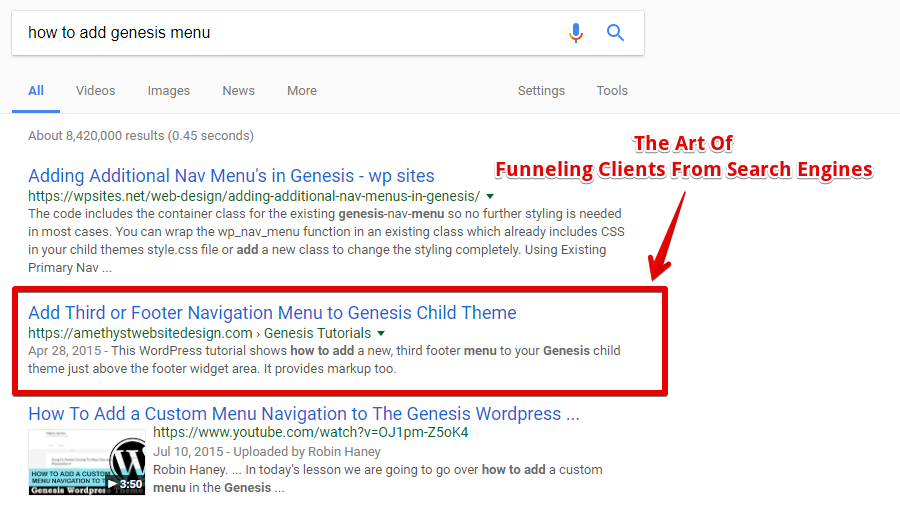
The second result by Amethy Website Design is the blog of a website design agency, and you just landed there without them having to spend a dime on advertising.
You read their problem-solving article, and they get a credibility boost and a chance to funnel this Google visitor (you) to their website designing service. They remain in your subconscious mind so that you can contact them if you need a more complex design done.
This is the #1 principle to land website clients that have a clear intent of buying or hiring your services.

To leverage your blog to get clients from search engines, you have to write blog posts that solves your readers' problems or talks about those. This will increase your chances to appear when they search something on Google and hence eventually hire you.
Research carefully on the issues your clients are facing, check other competitors who are in your space (you can use a tool like SEMrush) and see what type of posts they are writing and that's where you get your starting point.
Then you can use Google's related searches to find similar ideas. Free keyword research tools like Google's keyword planner would also help you get a lot of similar content ideas and associated keywords to get started.
Make sure your blog is optimized and is relevantly visible to search engines too. Submit your sitemap, use schema markup to show up your availability, pricing, etc directly on your search results.
If you're not sure what to add, here is a list of essential WordPress SEO plugins that will help you install the right plugins. If you're targeting your local clients in your work area, the above list contains a list of local SEO plugins too, choose one as needed.
Pro Tip: Don't use too many plugins, only use the ones that your business needs from the above list.
Use Social MediaThe next best place to get more clients for your business is to hang out where your potential clients hang out too.
Twitter and Instagram are great places to get started.
On Twitter, you can use relevant hashtags in your tweets so that it reaches the maximum people searching or using that keyword. To get started, use the following guide which is about using your competitors' social media strategy.
You can also use Twitter search to land potential recruiters by searching for relevant keywords like:
Hiring [add keyword here]
Looking to hire a [add keyword here]
I need a [add keyword here]
or even help-asking tweets like how to do [add your keyword/niche relevant work ideas] etc.
Also, make sure you are using the platform at its best. Read the official Twitter blog for great tips that work. Here is a golden nugget that helps you optimize your freelance shop to get more visibility on Twitter.
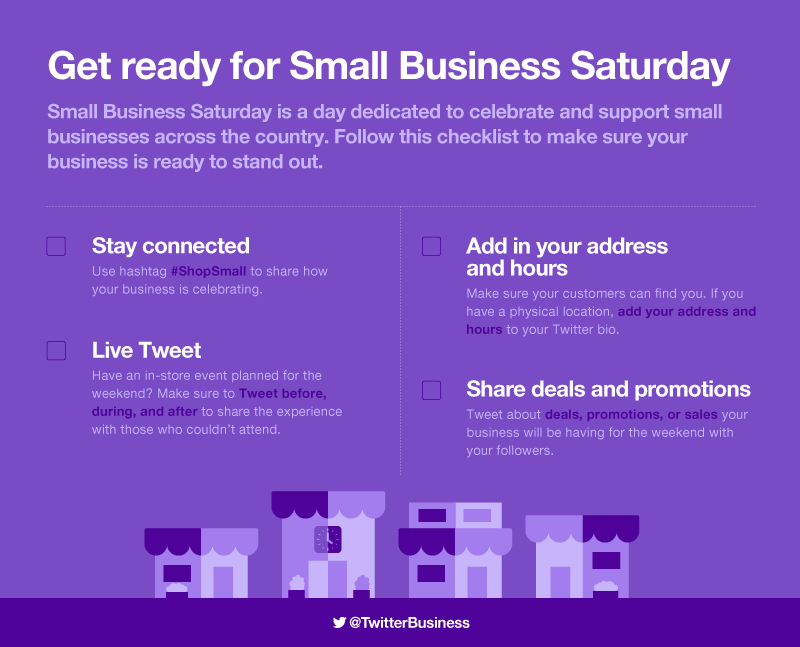
Similarly, Instagram is a place that is often underrated for business purposes. With over 800 million monthly active users (data source) Instagram is a place to market your business to get more clients.
Optimize your profile, add your location (if need be) and in the profile bio link, make sure you add a link that shows your visitor what to do next.
Since you cannot post multiple links on Instagram, your profile link should lead your potential client to the right location to get a free quote.
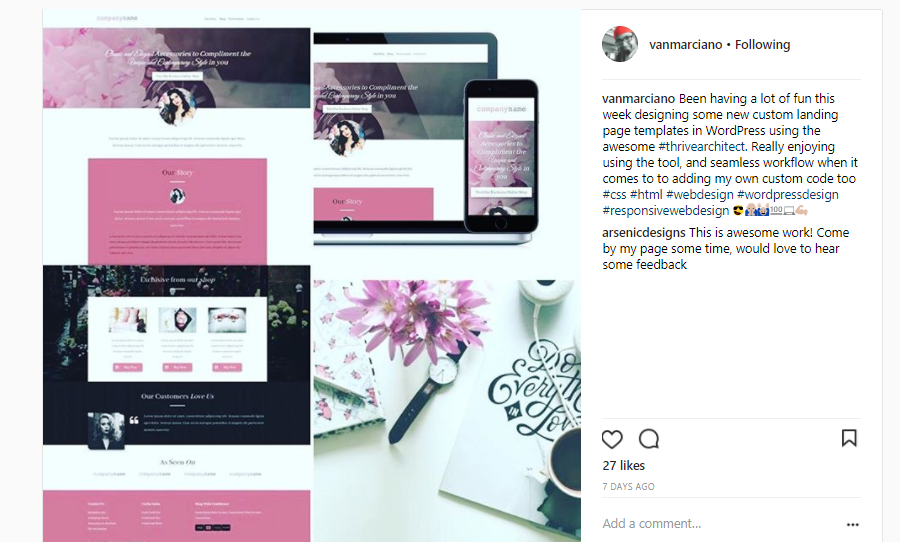
Use multiple images, post with relevant hashtags (hashtags are very important but don't use more than 5-7 hashtags) to your Instagram updates. Here is a perfect example of an Instagram post (by Fabrizio, a great designer) done right. It showcases the work of the designer, then uses a good description and relevant hashtags so the post gets found by a relevant community of users who can be his potential clients.
Sometimes, leveraging a bigger platform is an excellent alternative than struggling to get good referrals for your own network. Just like freelancers use a job board or a site like Upwork, designers can leverage Marketplaces like TemplateMonster's to get ahead of your competitors.
The main benefit of getting your work showcased in a marketplace is you get the exposure to 1000s of customers who already use and trust the platform. This saves you the time to market your business and get newer clients.
They do take away a part of your earnings for sure, but that fee is worth every penny, you get acquiring new clients. You can further use the word of mouth of these clients to land new referral gigs.
For example, if you get selected for TemplateMonster's MarketPlace, you can easily get in front of your millions of potential clients (they have 6 million potential clients in the last quarter itself) which is something you or me as an individual freelancer might not make it at an individual level.
You could also keep doing your freelancing and graphic design work side by side.

So, these were the best yet often underrated strategies that you could use to market your WordPress web design business and land new clients.
Your client acquiring process shouldn't stop even after your first few clients. In fact, there starts your most vital method to leverage these happy clients to get new referrals.
We will, however, leave that topic to leverage your happy clients to get newer clients for a future post. Stay tuned by subscribing to the TemplateMonster blog.
What strategies have been working for you to get a steady influx of clients?
Share it with other readers and us in the comments section. Let's form a community of helping freelancers.
Related Posts5 Ideas for Getting Exposure for Your Website
Best CDN Providers To Speed Up Your WordPress Website
How to Add Custom Login URL in WordPress?
A Guide to the WordPress Template Hierarchy
Premium Or Free WordPress Themes: A Constant Battle
Source: How to Market Your WordPress Web Design Business for More Exposure
Hidden Backdoor Found In WordPress Captcha Plugin Affects Over 300,000 Sites
One such incident happened recently when the renowned developer BestWebSoft sold a popular Captcha WordPress plugin to an undisclosed buyer, who then modified the plugin to download and install a hidden backdoor.
In a blog post published on Tuesday, WordFence security firm revealed why WordPress recently kicked a popular Captcha plugin with more than 300,000 active installations out of its official plugin store.
While reviewing the source code of the Captcha plugin, WordFence folks found a severe backdoor that could allow the plugin author or attackers to remotely gain administrative access to WordPress websites without requiring any authentication.The plugin was configured to automatically pull an updated "backdoored" version from a remote URL — https[://]simplywordpress[dot]net/captcha/captcha_pro_update.php — after installat ion from the official Wordpress repository without site admin consent.
This backdoor code was designed to create a login session for the attacker, who is the plugin author in this case, with administrative privileges, allowing them to gain access to any of the 300,000 websites (using this plugin) remotely without requiring any authentication. "This backdoor creates a session with user ID 1 (the default admin user that WordPress creates when you first install it), sets authentication cookies, and then deletes itself'" reads the WordFence blog post. "The backdoor installation code is unauthenticated, meaning anyone can trigger it." Also, the modified code pulled from the remote server is almost identical to the code in legitimate plugin repository, therefore "triggering the same automatic update process removes all file system traces of the backdoor," making it look as if it was never there and helping the attacker avoid detection.The reason behind the adding a backdoor is unclear at this moment, but if someone pays a handsome amount to buy a popular plugin with a large user base, there must be a strong motive behind.In similar cases, we have seen how organized cyber gangs acquire popular plugins and applications to stealthy infect their large user base with malware, adware, and spyware.While figuring out the actual identity of the Captcha plugin buyer, WordFence researchers found that the simplywordpress[dot]net domain serving the backdoor file was registered to someone named "Stacy Wellington" using the email address "scwellington[at]hotmail.co.uk."
Using reverse whois lookup, the researchers found a large number of other domains registered to the same user, including Convert me Popup, Death To Comments, Human Captcha, Smart Recaptcha, and Social Exchange.
What's interesting? All of the above-mentioned domains booked under the user contained the same backdoor code that the WordFence researchers found in Captcha.
WordFence has teamed up with WordPress to patch the affected version of Captcha plug-in and blocked the author from publishing updates, so websites administrators are highly recommended to replace their plugin with the latest official Captcha version 4.4.5.
WordFence has promised to release in-depth technical details on how the backdoor installation and execution works, along with a proof-of-concept exploit after 30 days so that admins get enough time to patch their websites.
Source: Hidden Backdoor Found In WordPress Captcha Plugin Affects Over 300,000 Sites
How to Start a Family Blog
Putting your life in the public eye, though, does bring up some considerations. You want to make sure that you're on the same page with the rest of the fam when it comes to what should be written. Don't embarrass anyone. Don't air dirty laundry. And don't post things that could jeopardize your career, your good name or your kids' chance at getting into college. If you're careful, using your real name shouldn't hurt you; if you have concerns, use only first names or nicknames, or consider blocking your blog from search engines—Wordpress, free blogging software, has a handy checkbox that'll put you in stealth mode.
Ready to take on this new project? You can get your blog up and running in an evening with these easy steps.
1. Find a host. There are two basic ways to host your blog—on your own domain or with a blogging platform. If you own your own domain, maybe it's time to start using it; or if you're interested in registering one, it's relatively cheap and painless. Check out sites like Register.com, GoDaddy.com, iPowerWeb.com or NetworkSolutions.com to register a name and find a hosting provider for about $10 a month.
If you don't care about your vanity URL and are a bit wary when it comes to tech, most blog platforms will host your new site for free. You'll end up with a name like "thehitchedfamily.wordpress.com" instead of "thehitchedfamily.com," but the blog program will take care of a lot of the technical back-end stuff you'd have to deal with otherwise. Also, if you want to customize your blog beyond some relativ ely strict parameters, expect to pay a few dollars a month—it'll be comparable to paying for hosting, which will run you about $7.00 a month.
2. Choose your platform. Some of the more popular blog platforms are WordPress, Movable Type, Blogger, LiveJournal and TypePad. You definitely have a lot of options to check out and most of these are free, like Blogger. WordPress for example, is one of the most popular platforms because it's easy to modify and has an intuitive interface. For a small fee you'll be able to do some customizing of the layout, the colors and the header.
3. Pick a name. Naming your blog is often harder than expected. You can go with something like The X Family Blog, but you may not want your last name associated with it, depending on your privacy concerns. You can also go with nicknames, first names, an inside family joke or a more targeted name that has something to do with the content you're planning on posting.
4. Customize with plug-i ns. You can do a lot on your blog with very little technical knowledge when you start adding plug-ins. Search your blog platform's site for add-ons that can help you create photo galleries, easily add videos, let users subscribe by e-mail, track your stats and more. Plug-ins can be installed within minutes and they can help make posting easier for you and your site will be more exciting for your visitors.
5. Set up your authors. Will you be the main author of the blog, acting as the mouthpiece for your family? Will your spouse or children be contributing, too? You can set everyone up with their own username and login, and everyone can post at will. Don't forget to write short bios to share.
6. Start posting. The first post is always the most nerve-wracking. You're staring at the blank screen in front of you, wondering what you can say that'll really impress people. Don't worry about impressing. Your blog isn't a dissertation. Just say hello, introduce yoursel f and what you'll be talking about then get on with it. Your blog can and will change over time as your voice develops and your life changes. And you can always erase things, go back and edit them or just put them out of your mind once they've moved off your front page.
Also, keep in mind that blogging isn't just about writing. You can post videos, photos or audio content. And if you're more comfortable with those methods of expression, by all means use them.
7. Tell your friends. The worst thing that can happen to your blog is that nobody will read it. So make sure you tell your friends and family, then make it easy for them to sign up for updates via e-mail or RSS (we'll get into this another time). Don't forget, you can spread the word through Facebook and Twitter too. You'll love seeing your stats spike when you post something new. And knowing people are reading is the best motivation to keep writing.
Still need some more motivation to get started? Ch eck out some family-themed blogs for inspiration, like: Dooce, AtHomeDaddy, Sweetney, Uncornered Market, and The Marriage Blog of Brian and Trula.
Do you have any tips on creating a family blog? Go to our Message Board and let others know.
Source: How to Start a Family Blog
How to Start a Blog for Your Business That Actually Makes Money
"Content marketing" has long been a buzzword among marketers and business owners. Problem is, getting started is a pain and actually turning a profit through blogging for your business is much easier said than done. Here's how you can get started in five simple steps.
So you've decided that starting a blog is the best way to market your business moving forward. When we first started HighSpark and our blog on presenting and design, we quickly realized that it was not as easy as most make it seem. Over a few years, we've managed to grow our email list to about 11,000 people by being deliberate with how we run our blog.
If you're new to the publishing space and want to get started on the right foot, here are some easy steps to ensure you build your blog properly from the beginning.
1. Identify why you're starting the blog.The 'why' I'm referring to here is tied more closely to your business goals. If you're looking to get immediate sales through a blog from the get-go, look elsewhere. Blogging and content marketing, in general, is a long-term commitment. It can be powerful, but only if you commit to it consistently.
Be clear on which of these you're starting a blog to do:
a) Build credibility as a subject matter expert
b) Engage with your audience to drive traffic
c) Boost your search profile on engines like Google
d) Garner sales for your company
e) Monetize viewership from ads or sponsors
f) Build a list
g) All of the above
What you decide on will affect the content you put out and how you decide to run it. For B2B companies, their blog typically sits at the top of their marketing funnel to drive qualified traffic to their website and build credibility for their company and offerings. It's hardly ever a 'build a blog and make money' scenario.
Writing a blog without an intentional bottom line can be disastrous in the long term because of the time invested without a return. In our case, our blog is an avenue to build expert authority for our brand, collect information of prospects and boost our search profile on Google. We have managed the content we publish as such.
2. Select your niche.Before you even register your domain name or host your blog, it's critical to know exactly who you're serving. Typically, your niche will be tied closely to your business and expertise. For our company, we write mainly to executives who want to develop better presentations in a different way. This profile has shaped the kind of content we create and how we reach out to our clients.
The type of audience you want and what you'd like them to do will affect the language you use, and these metrics help you as the webmaster to craft content that resonates with them.
An easy way to do this for your blog is to ask yourself these questions:
What are the hopes and dreams of my readers?
How can I help them achieve those dreams with content?
Does the content I put out help to build my blog's brand as trustworthy to these readers?
What is the follow-up action I'd like them to take after reading my blog?
Getting bogged down by this decision is the worst, but it's not something to take lightly. Here are some tips:
Try to have a short domain name. Shorter URLs are easier to remember and type.
Use words that are easy to spell. This makes sharing your posts much easier.
Choose a name that implies the niche of your blog. This way, your readers can immediately guess what your blog is about, even if they've never heard of it before.
Don't box yourself too much into one niche. If your domain name is too specific, this can stop you from expanding your niche later on.
If you're just starting out, there is no hard-and-fast rule or recommendation for picking a web host. Generally, there are some affordable options that work great for new blog owners, and more specialized and optimized options for blogs with more traffic.
Here are some key things to note:
If you intend to host your website on the WordPress CMS, ensure that your web host has a cPanel dashboard that lets you install WordPress in a single click.
Test the host's support staff to ensure you can get help when you need it. There will be instances when you need technical help, so try speaking to the support staff to gauge responsiveness and competency before signing up.
Hosting that is cheap upfront tends to have more expensive renewal rates, so ensure that you keep tabs on how much you're paying.
Try to get web hosts that also provide a free domain upfront when you first sign up so that you can save some money.
WordPress offers thousands of free theme options by default that allow you to customize the visual design of your blog. For our website, we use the Divi theme from Elegant Themes – a drag-and-drop builder that allows non-programmers like us to make design changes really easily.
Starting a blog can potentially boost your business by helping you reach out to more potential customers and build authority. Don't let the inertia of starting stop you – it's a lot easier to get started than you think. Good luck!
Eugene Cheng
Eugene Cheng is Partner & Creative Lead at HighSpark a strategic presentation consultancy and training company serving Fortune 500 companies based in Singapore. He has previously written and been featured on Inc-Asean, Forbes, e27, HubSpot, Asiaone, Channel News Asia, Yahoo News and more. He also runs https://motionsauce.com and https://freelancefuel.comSource: How to Start a Blog for Your Business That Actually Makes Money
Where to Get the Best WordPress Customer Support?
You don't have to be a technical genius to create a site with a WordPress theme. But once the work is done, it's too early to relax. All WordPress sites break at some point. There are many hazards that can affect their performance: malware, hackers, DDoS attacks, and outdated software.
Have you ever thought who'll care of your WordPress website once it goes live? It takes longer to keep it updated, backed up, and protected. Unless you are tech savvy, you'll also have to seek advice on WordPress help forums and study many tutorials. Add your main business tasks to that, and sleepless nights are guaranteed.
You can get third-party WordPress support in two ways. The first one is to hire a specialist, but his work can cost you a four-digit paycheck a month.
A much cheaper alternative is to order a WordPress maintenance service with pricing plans starting at less than $100.

There are many technical issues to handle on your site. Here's a full checklist of what you'll get with WordPress support services.
Learn how the best WordPress support services differ from each other in this table. It will let you choose the most profitable solution for your needs.
WP Site Care Maintainn The WP Butler Proactive WP WP Buffs API Studios Total WP Support SkyrocketWP Cinch Web Services GoWP Cloud Backups daily / hourly daily weekly / daily weekly daily / hourly daily weekly / daily / real-time daily daily / real-time daily Software Updates weekly or whenever available weekly once / twice / thrice a week within a few days of the release daily weekly or whenever available on the 1st day of each month weekly daily daily, weekly Uptime Monitoring 24/7 every 5-15 min 24/7 24/7 24/7 24/7 24/7 24/7 24/7 24/7 Security Monitoring 24/7 24/7 once / twice a week daily daily 24/7 24/7 24/7 24/7 24/7 Incident Management + + + + + + + + + + Custom Development starting from 2 hours per month for extra fees (5 hours cost $750) unlimited 15-minute tasks starting from 1 hour per month unlimited edits starting from 2 hours per month starting from 1 small job per month starting from 1 hour per month for extra $50 per hour unlimited 30-minute tasks eCommerce Support + + + + + + for extra $60 per month + + + Page Speed Optimization + for extra fees for extra $140 per hour + + + + + + + Website Migration for extra $200-$300 + + + for extra fees + for extra $150, free - to their own hosting + + for extra $99 Hosting no no no no for extra fees + + + + no Staging Site + + for extra fees no for extra fees + + + + + SEO Services + no no no + + + + no no Reports monthly no no monthly weekly monthly monthly monthly no weekly Monthly Price $79 - $999 $49 - $149 $41 - $205 $79 - $399 $40 - $120 $119 - $599 $49 - $249 $99 - $449 $49 - $99 $29 - $149 Support Hours 7am - 7pm MDT / MST (urgent - 24/7) 9am - 8pm ET 7am - 4pm PST 9am - 5pm CT 24/7 9am - 8pm EET / EST 9am - 5pm PST 7am - 6pm CST (urgent - 24/7) 9am - 6pm CT 7am - 5pm ET VerdictWith these professional WordPress services, your site will always be up to date, secure, and fast. GoWP is the cheapest solution, while SkyrocketWP provides all the features without charging any extra fees. It's up to you which one of them to use to maintain your site. You can also delegate your WordPress tasks to the support team of wordpress.com.
Related PostsWordPress Themes According To Our Customers' Choice in 2017
Want to Track Customer Behavior Under the Loupe? Let Us Add Google Analytics to Your WordPress Site Blazing Fast
Best Customer Service and Chat Plugins for WordPress 2017
Brand New Solution to Attract Home Customers: Real Estate Agency WordPress Theme
Source: Where to Get the Best WordPress Customer Support?
7 blogging rules to promote yourself in today’s job market

If you already have a blog, you already know that it's a great way to establish your personal brand, share your opinion, inspire discussion and demonstrate industry expertise.
Since these are the very skills that recruiters typically look for, every serious job hunter should have a well-maintained blog.
So, how do you get started?
There are a number of free or paid sites that offer blogging platforms for even the most inexperienced website user. WordPress.com is easily the most popular blogging platform available. The free version offers limited customization, but, for a basic site, it is easy and simple to set up. Blogger.com is equally good and is Google's blogging platform to boot.
Once you set up your blog, be sure to include the following basic pages: your profile page with a picture, a portfolio and a contact information page.
Before you begin writing, define your audience. If you want to use your blog to further your career, you need to write about the industry you want to work in, which means you need to write for those already in the industry.
Now that you've got your blog set up and know your audience, it's time to start posting. There are multiple types of article styles including the most popular ones: how-to or DIY blogs, reviews, personal stories or interviews. A well-written how-to post or review can help show off your expertise. Personal stories tell people more about you. And interviewing other experts in the field shows your versatility and is a great networking tool, too!
If your audience begins to comment on your blog, make sure you thank them and respond to any questions or feedback. Also, never respond negatively. If someone is clearly an internet troll, just delete them from your comments.
When you start blogging, you will begin to naturally improve upon a number of skills like writing, researching, promotions and social media. These skills, in turn, will open you up to far more job opportunities.
A well-crafted blog can help you get noticed by the right people, and build your reputation. It can be a great way to show that you are:
Whenever you apply for a job, the first thing a recruiter will do is investigate you online. Having a blog is a positive digital footprint that will give potential employers a picture of who you are and how you carry yourself, both personally and professionally.
It also helps you build a network. Employers are not only looking for employees who bring knowledge and a superior skillset to the table, they also want someone who is well connected. So, while you might have 500+ connections on LinkedIn, having a blog that has a dedicated readership shows that you know how to create — and keep — connections, both in the digital and the real world.
Indian-born Murali Murthy is an acclaimed public speaker, life coach and best-selling author of the ACE Books — The ACE Principle, The ACE Awakening and The ACE Abundance. He is also chairperson of CAMP Networking Canada. See aceworldfoundation.com.
Source: 7 blogging rules to promote yourself in today's job market
How to Start a Blog That Your Industry Loves

How to Start a Blog That Your Industry Loves
The good news is that even if you're a novice to web development and online strategies, you can still run a website that reels in visitors who are in your target market. It just takes a little bit of effort and patience.
In this article, we'll show you how to start a blog that your industry loves.
How To Start A Blog (Quick Tips)Read the full details on how to start a blog below.
How To Start A Blog – Build Your Blog on WordPressOne of the easiest ways to do content marketing is with the aid of a content management system (CMS). The best choice for a CMS is WordPress.
Why? Because it commands a whopping 58% of the market share. That's more than the rest of the CMS options combined.
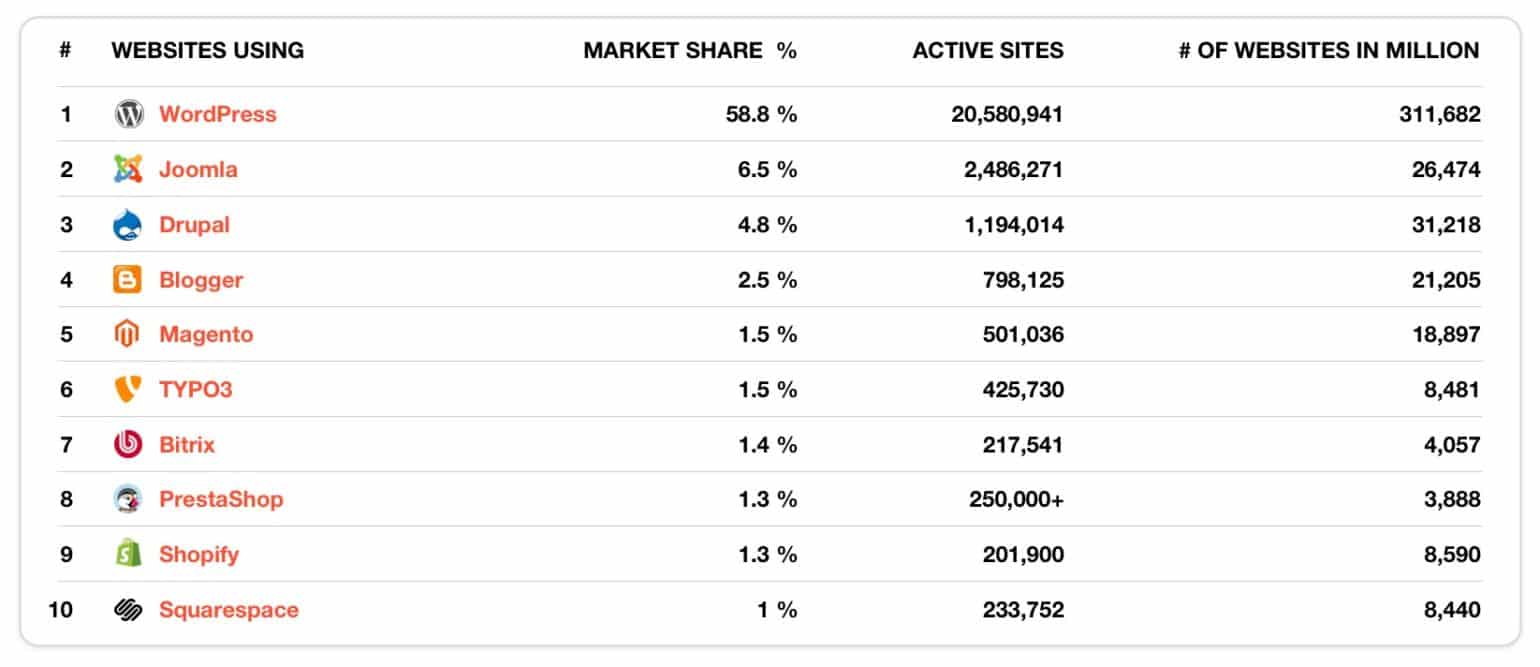
That means you'll find it much easier to get online support for WordPress. Just Google the question that you have and you'll likely find the answer from multiple sources.
Also, there's a reason why WordPress is the most popular. In terms of user-friendliness and extensibility, it simply can't be beat.
Finally, WordPress also offers a WYSIWYG (What You See Is What You Get) editor. That means you don't have to memorize a bunch of HTML syntax to format your blog posts. You can use a word processor-like interface that makes it a snap to highlight important portions of your articles.
Install Yoast to Optimize Your Blog for SEOAs we've just noted, WordPress is extensible. That means you can add new features by installing plugins. One of the plugins that you should install is Yoast.
That's because Yoast will help you with search engine optimization (SEO). Yoast is a critical component of how to start a blog. The plugin offers the follow features:
As of this writing, there are more than 5 million active Yoast installations online. The plugin also has a rare 5-star rating.
Basic Yoast is free. However, you can also get a premium version that offers 24/7 support in addition to a few other features.
How To Start A Blog – Add a Sitemap to Your BlogYou should also add a sitemap to your website.
If you're not familiar with sitemaps, they're XML pages that search bots crawl to get a hierarchical view of what's on your site. They help with SEO.
The good news is that if you've installed Yoast, you've already got a sitemap. Yoast creates that for you.
However, you should still link to your sitemap in the footer. That way the search bots will find the sitemap when they crawl your site.
Submit Your Sitemap to Google and BingOnce your sitemap is created, it's important to formally submit it to both Google and Bing.
Start by visiting the Google Search Console. Follow the process of adding your site if you haven't already done so.
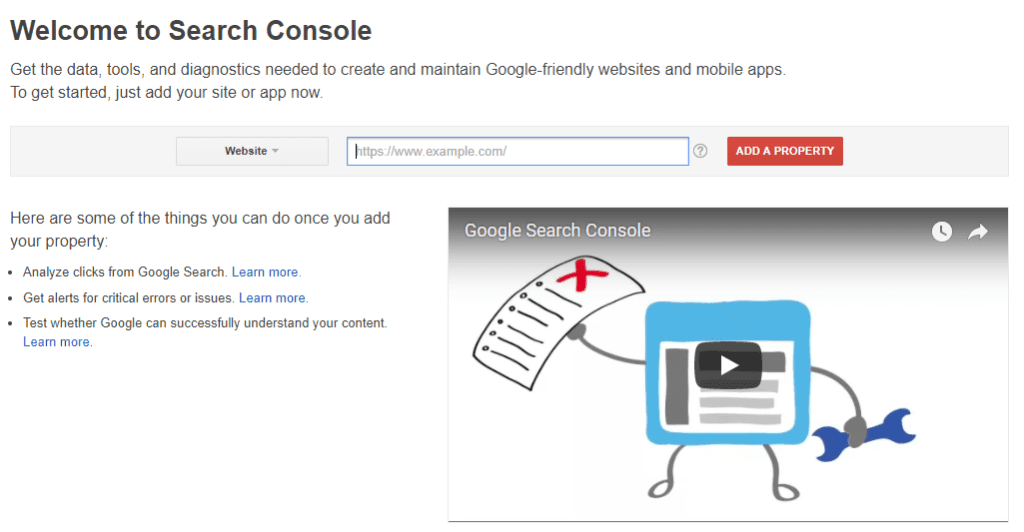
Once your site is added, visit the dashboard for that site and click on "Crawl" on the left-hand sidebar. Select "Sitemaps" from the dropdown menu that appears.
Click on the "Add/Test Sitemap" button on the upper, right-hand side of the main screen. Enter your sitemap URL and click on "Submit."
If everything worked right, you should see a note that says your sitemap was submitted. Click the "Refresh" link and keep refreshing the page to ensure that Google can read your sitemap. You shouldn't see any warnings on the table.
Next, submit your sitemap to Bing Webmaster Tools. Start by adding your site in the "Add a Site" field at the very top of the dashboard. Once you click "Add," Bing will ask for a sitemap URL. Just enter it in and submit it.
How To Start A Blog – Add a Sidebar to Promote Your BusinessIt's also a good idea to promote your business right alongside the articles on your blog. You can do that with a sidebar.
The good news is that almost every reputable WordPress theme on the market makes it easy for you to add a sidebar. Check your theme's documentation for details on how to do that.
Once you've got your sidebar set up, it's important to include the right kind of info in it.
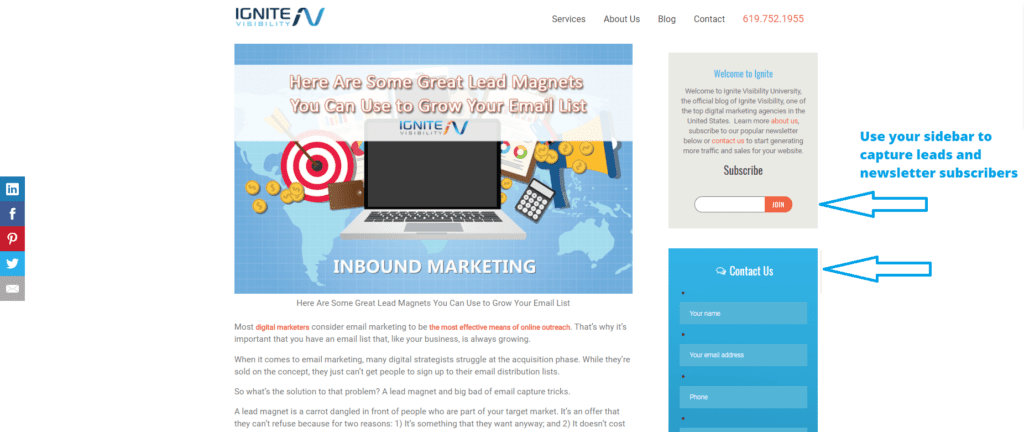
First, add a section that tells people who you are. Give details about the benefits of your products or services. Be sure not to hold back on bragging rights.
How To Start A Blog
Also, include links to top guides that you've written. That's how you'll position yourself as an expert in your domain.
Next, include a promotion for your email list. It's usually a great idea to include the field to capture a visitor's email address in the sidebar itself. You could also just add a link to a form that captures the email address.
Finally, include a list of your top categories in the sidebar. That will give curious visitors an easy way to find other great content that you've produced.
Install Share Buttons – How To Start A BlogIf you want your articles to go viral, then you need to make it easy for people to share them. You can do that with share buttons.
You've undoubtedly seen share buttons all across cyberspace. Just view a post on a popular blog and you won't have any trouble seeing the little Facebook and Twitter icons. You'll probably see icons from other social media platforms as well.
When you click one of those icons, you'll see a popup that allows you to quickly share the article with friends and followers.
Add those share icons to your site as well. There are plenty of free plugins that you can use, but if you want a comprehensive, premium solution, take a look at Sumo.
Write Longform ContentUnfortunately, you're going to need to write long articles if you want to rank nowadays.
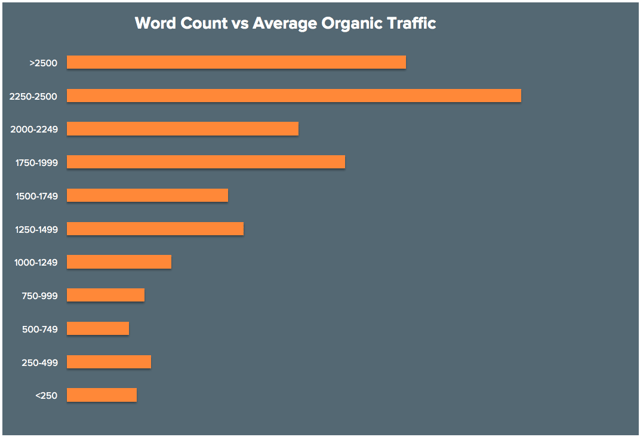
It's best to make sure that all your best content is at least 1,500 words in length. If you're trying to rank for more competitive keywords, you'll probably have to boot that up quite a bit.
That's because Google loves long-form content.
Not only that, but there's evidence that long-form content tends to get shared more. Of course, that means it earns more backlinks. That, in turn, helps with SEO.
How To Start A Blog
If you're a busy entrepreneur and you don't have time to pump out one 2,000-word article after another, then you're going to have to outsource the task to a professional writer. Make sure that the writer is someone who's familiar with your niche, a great researcher, and knows how to produce engaging content.
Guest-Post on Other People's BlogsAnother way to earn your stripes as a competitor in your industry is with guest-posting.
What's guest-posting? As the name implies, it's posting an article on somebody else's blog.
That helps you in a couple of ways.
First, it establishes you as an authority figure around cyberspace. You build your personal brand when people see your name on a variety of websites.
Second, you can use the guest posts to link back to your own blog. That will provide some link juice back to your site.
Keep in mind, though, that you should only link back to your own blog if it makes sense within the content of the guest post. If you try to force-fit a backlink to your site from unrelated content, you might fall out of favor with Google.
How To Start A Blog – Do InterviewsIf you're offering something great that people want to buy, then there's almost certainly a journalist somewhere who wants to talk to you about it. Grant the interview and use the opportunity to generate buzz about your brand.
During your interview, be sure to drop a reference to one of your more popular blog posts. The journalist who's writing that story will almost certainly link back to it in the news piece.
Bingo. Now, you have a backlink from a reputable news source.
Drop NamesIf you're looking for info on how to start a blog, here's one of the best pieces of advice: drop names.
There are already plenty of "established" authority figures in your industry. Many of them are non-competitors.
Identify those people and mention them in your blog posts. Then, send them an email letting them know that you mentioned them.
What will happen then? They'll likely tweet out your article to their followers with some type of "Hey, I got mentioned here" text.
And, just like that, your brand has a little bit more exposure within the industry.
How To Start A Blog – Share Posts via EmailPart of your online marketing effort includes building an email list. You should use that email list to promote your blog posts.

How To Start A Blog
If you send out emails once a day or once a week, be sure to include in your email a link to your best and most recent articles. Add a summary that tempts people to click the link so they can learn more.
Don't forget to include "callbacks" in your emails as well. Add links to older, but very popular blog posts as a way to boost your traffic.
How To Start A Blog – Use Social MediaIf you want to generate buzz about your blog, you need to go social.
Set up accounts on social media platforms that are relevant to both your brand and your target market. You'll find that some social media sites work better than others.
For example, if you're in the B2B space, then LinkedIn is probably the best place to get the word out about your brand. On the other hand, if you're running a consumer-driven business model, then Twitter might be a better place to reach people.
Also, Instagram and Pinterest are both image-driven platforms. If your promotions are graphic-intensive, you should use one or both of those social media channels.
Once you've established your social media portfolio, make sure that you use each platform to post links to your articles. That should give you quite a bit more traffic which will in turn improve the reputation of your blog.
Finally, be sure to include links to your social media profiles on the header and footer of your blog so that visitors can easily find them.
How To Start A Blog – Capture EmailsYour blog is a means to an end. You use it to attract more business.
One of the ways that you can use your blog to find leads is an email capture system.
We've already seen that you should try to capture email addresses in the sidebar. There are other ways to do it as well.
For example, Sumo offers a popup that's a "polite way to get signups." That means the popup doesn't annoy your visitors by appearing in the middle of the screen.
Also, it's usually a good idea to offer people something free in exchange for an email address. There are very few people who are willing to give up their email address without getting something in return.
Some marketers offer a free "guide" that's relevant to people in their target market. Others use contests.
Whatever you use is up to you, but it's a great idea to offer some incentive.
Consider Going LiveHow would you like to engage with your visitors while they're on your site? You can do that with live chat.
It's very likely that not a whole lot of other businesses in your industry are using live chat on their blogs. That's all the more reason you should do it.
If you offer live chat and your competitors don't, you're giving yourself an advantage in terms of customer service. That's almost certainly going to help your business.
Intercom offers a live chat solution that you can install on your website.
How To Start A Blog – Don't QuitHarsh reality: you will not become an overnight success as a blogger.
It will take time. A lot of time.
That's why you have to be willing to commit for the long haul. Once you start blogging, you need to keep blogging. Consistently.
If you don't see traffic improve dramatically after a few weeks or months, don't give up. Keep plugging away at it until you finally publish an article that resonates with people in your target market.
In a nutshell, successful blogging is an exercise in both diligence and patience.
Wrapping Up How to Start a BlogNow you know how to start a blog that your industry loves. The next step: find a reputable provider that will host your blog online. Then, get a great theme that works for your industry and configure it to work for your target audience. Finally, start blogging.
Source: How to Start a Blog That Your Industry Loves
25 WordPress Portfolio Themes to Showcase Yourself
Creating a stunning portfolio website is a very important step in making your work stand out from the crowd. Even if you're a photographer, graphic or web designer, illustrator or any other kind of creative, you must know that having a special place to showcase your images and services is a vital aspect. The way your portfolio looks says a lot about yourself, the way you're working and the kind of work you create, so if your website has a clean and modern design, you can make sure that you'll be remembered and attract more clients.
To make things easier for you, we selected 25 of the best WordPress portfolio themes that are both beautiful and easy to use in order to help you create a unique portfolio, that will surely showcase your true self.
P.S. Also check out these WordPress portfolio plugins. They will come in handy!
Flexi – Simple WordPress Portfolio Theme

Flexi is a Creative Portfolio WordPress theme that's fully responsive and perfect for creating professional portfolio websites. This theme was created using Bootstrap 4.x and it includes a Megamenu. It lets you choose between lots of different layouts such as Grid, Packery, Carousel, and Ribbon so you can choose the one that's perfect for your own website. Flexi has lots of features and options and is a very flexible and elegant option. This theme comes with two plugins included: Visual Composer and Slider Revolution.
Fizz – Responsive WordPress Portfolio Theme

This WordPress Portfolio Theme uses WordPress' Live Theme Customizer so you can always preview the changes you're making while creating your website. Fizz is a fully responsive and Retina ready theme that will fit any layout or screen resolution. This theme is optimized for speed and is also SEO ready. Fizz also comes with 3 plugins included in the package: Visual Composer, Slider Revolution, and Ultimate Addons so your work can be easier.
Delight Fullscreen WordPress Portfolio Theme

Delight is a fully responsive and high customizable WordPress theme that comes with unlimited skins and unlimited possibilities for you to create your own portfolio website. This theme requires PHP5 and it gives you the possibility to use a huge amount of shortcodes in order to customize your design. Delight uses Google fonts and a drag & drop system that you can use to insert your images and media into the theme. Best of all: this theme comes with lots of jQuery effects such as Cycle, Tabs, Accordions, Drop Down Menu, Tooltip, Colorbox, Auto Alignment and many more!
Cufo – Responsive WordPress Portfolio Theme

Cufo is a highly customizable and fully responsive WordPress theme. It comes with 22 demos (and they are adding 1 new demo every month) that you can choose from and start creating your own website. You can also see the changes you're making in a real-time preview. It's perfect for portfolio websites for agencies, designers, photographers, graphic designers, illustrator, engineers, business people and more! Cufo has a minimalistic style with great effect and it gives you the possibility to create a full-screen portfolio. One of its best features is that it lets you import videos from Youtube, Vimeo or self-hosted sources.
Rex – Minimal WordPress Portfolio Theme

Rex is a WordPress theme with a minimal and clean design, that's perfect for portfolios and projects. It's a perfect choice if you want to showcase your work with stunning photography in a very modern way. If you want to create a business around your portfolio website, Rex is optimized for WooCommerce. It also comes with 4 plugins included: Visual Composer, Slider Revolution, Ultimate VC Add-ons and ACF Pro. This theme has a clean code that makes it easier for users to achieve the desired result.
Edge WordPress Portfolio Theme

Edge is a WordPress Portfolio Theme that lets you create unlimited portfolios to showcase your work. You can choose between multiple portfolio styles and add lots of widgets such as social icons, gallery, Flickr, recent posts, popular posts etc. In order to make your set-up and customizing easier, Edge comes with an easy to follow PDF file with screenshots and explanations.
Sibylla – WordPress Portfolio Theme

Sibylla is an elegant theme that's perfect for portfolios. We recommend it for creative agencies, freelancers and professionals. If you want to create a fast website that showcases your projects or blog posts in a modern way, then Sibylla may be the right choice for you. This theme is very easy to use and it lets you change the website title or replace it with your logo, customize it with header images, 404 page texts, galleries and more! With this theme, you can create Isotope and Masonry Layouts for your projects, in order to achieve the desired result for your website.
Artisan Creatif – A WordPress Portfolio Theme

Artisan Creatif is handcrafted by We Are Pixel8 team and it's one of the best WordPress themes for creative professionals and studios, design firms, agencies, photographers, illustrators and more! This theme gives you the possibility to showcase your work with filterable portfolios, individual case studies and more! Artisan Creatif is very easy to use and it has a very elegant and efficient design.
Monsterrat – Minimal WordPress Portfolio Theme

Monsterrat Portfolio WordPress Theme is a minimal WordPress theme that can be easily used to create a beautiful portfolio in a short time. It can be used by designers, artists, photographers, graphic designers, freelancers and even models! Because it's highly customizable, this theme is very versatile and can be used in various ways. Monsterrat has a clean and beautiful design and it's easy to use even for people who aren't that familiar with coding. This theme comes with Visual Composer included.
ALIVE – Responsive WordPress Portfolio Theme

ALIVE is a fully responsive WordPress theme that's perfect for portfolios and creative concepts. It could work perfectly for any kind of creatives including graphic designers, illustrators, photographers, agencies and more! ALIVE is very easy to use because it comes with Drag & Drop Page Builder (Visual Composer Premium), so you can quickly create your unique portfolio. We recommend it if you're searching for a clean and modern WordPress theme for your projects.
TheJ – Creative WordPress Portfolio Theme

TheJ is a minimal and clean WordPress portfolio theme for professionals. It's very easy to use and it runs smoothly and fast. TheJ can be used in order to create elegant and creative portfolios. This theme also gives you the option to insert your own logo on the home page of your website and to customize it with social links, custom widgets, custom color options and more. You can start creating your website by choosing one of the 4 prebuilt homepage options.
Wonder – Creative WordPress Portfolio Theme for Freelancers and Artists

Wonder is a beautiful and powerful WordPress Theme that you can use to create different types of portfolios such as audio, video, slider & stacked image portfolio. This theme uses WordPress Live Customizer that lets you modify various aspects of your website like the colors, logos, filters, effects and more! Wonder is fully responsible and looks great on all devices and screen sizes.
Peak

Peak is a fully responsive theme with a minimalistic design that's perfect for all kinds of creatives. This theme comes with a semantic and clean HTML5 and is focused on usability and gorgeous typography. Peak comes with extended documentation and excellent customer support whenever you need it. This theme can be used with WordPress 3.0+, is Retina-ready and looks perfect on different screen sizes.
Cleanse – Minimal Style WordPress Portfolio Theme

Cleanse is a clean WordPress theme with a flat and minimalist style that was created especially for creatives and businesses that want to create a stunning portfolio. It comes with a fully responsive layout built on the Bootstrap framework, beautiful typography, lots of portfolio styles, a page builder that makes it really simple to create and customize your own website! Because of the multiple demos included, you can start creating your website in seconds.
Xeon – Minimal Bootstrap WordPress Portfolio Theme

Xeon is a WordPress portfolio theme that comes with clean design and clean code. We recommend using Xeon if you want to create a gorgeous portfolio for agencies, freelancers, photographers, artists and many more! Xeon WordPress portfolio theme works perfectly on all devices and screen sizes. This theme also comes with more than 700 icons included.
HyperX – Responsive WordPress Portfolio Theme

HyperX is the perfect theme for freelancers, creative agencies, businesses and more! It comes with a lot of awesome features and it's very easy to set-up and customize. HyperX has a fully responsive design with multiple portfolio options. This theme is also WooCommerce ready so it makes it possible for you to create a blog, portfolio and shop altogether!
Primo° – WordPress Creative Portfolio Theme

Primo° is a stylish WordPress Portfolio Theme with a modern design that lets you create enhanced portfolios. It can be used by multiple types of creatives including photographers, web designers, illustrators, graphic designers and more! You can also create a blog to go along with your creative portfolio. This theme is very easy to use because it uses the Drag & Drop Page Builder!
Bayn – WordPress Business Portfolio Theme

Bayn is a clean WordPress portfolio theme that's created especially for showcasing gorgeous photography on your website, which makes it perfect for photographers and all kinds of other creatives that want to share their work with the world. Bayn has a full-width slider that is compatible with all modern browsers. This theme is fully responsive on all screens and is optimized for speed. It also lets you show your services on the homepage.
Piroll – Portfolio WordPress Theme

Piroll is a great portfolio theme that comes with a minimalist and modern design. It's a very good option if you want to create a clean portfolio with multiple slider options and even a video homepage. Piroll comes with more than 20 different portfolio layouts that you can choose from in order to create your unique design.
Roobia – Portfolio WordPress Theme

Roobia is a gorgeous WordPress theme created for portfolio websites. We recommend using it if you want to showcase big portfolio images and gorgeous typography. It was designed especially for designers, artists, photographers and all kinds of other creatives. This theme is business-oriented and very easy to use so you can create a unique portfolio website.
Blumen Portfolio WordPress Theme

Blumen is a clean WordPress theme created for portfolios. It comes with a modern design and nice typography options that make it possible for you to showcase your work in a very professional way. This theme is suitable for graphic designers, creative agencies, freelancers, etc.
Berg – WordPress Portfolio Theme

Berg is a WordPress theme crafted with creatives in mind. It lets you choose between multiple portfolio template layouts and pick the perfect one for your images and content. This theme also comes with an about page, a services page and blog templates included, so you can create a complete portfolio webpage.
Glacier – Minimal WordPress Portfolio Theme

Glacier is a minimal theme that's perfect for creating portfolios and project websites. It includes some awesome portfolio effects that can also work for showcasing photography or graphic design works. Glacier is WooCommerce ready so you can also start a shop along with your portfolio website.
Bookcase – WordPress Portfolio Theme

Bookcase is an interactive portfolio theme that's perfect for freelancers, designers, photographers, videographers and any other type of creatives. You can use this WordPress theme if you want to enhance your portfolio with great effects. This theme also lets you use 5 custom WordPress widgets.
Catalyst WordPress Portfolio Theme

Catalyst is a powerful, easy to customize WordPress theme that lets you create stunning portfolios. This theme is translation-ready and it comes with dynamic image resizing for your portfolio works. It also lets you choose between various portfolio styles and widgets.
Recommended for you:
10 Modern Fullscreen WordPress Themes 20+ Premium WordPress Themes for Professional Webs... 20 Best WordPress Themes for Creating Viral Websit... 10 Cool WordPress Review Themes for Movie, Restaur... 20 Beautiful Events Production Website Templates &... 45 Best Digital Downloads Website Templates &... 20 Gorgeous Photography Website TemplatesSource: 25 WordPress Portfolio Themes to Showcase Yourself