Popular Posts
-
Elegant Themes has been developing WordPress themes for a long time. It has developed lots of popular themes including Divi, Nexus, Fa...
-
It has not only changed the traditional perspective of buyers and sellers, but also revolutionized the entire concept of retail busine...
-
This is part of our "Learn WordPress" series. In this post, you will find out how to properly set up WordPress after creati...
-
Hello there! My blog post 'Spikes' was published on Sept. 22nd; however, the post before it called 'Flow' was published on...
-
This is a popular and the best bookstore WordPress themes that suit you for your e-commerce such as eBooks website. This feature...
-
AS part of streamlining our reporting function the Hedon Blog is to become formally part of HU12 Online with all of our Hedon news beginning...
-
The best Black Friday / Cyber Monday WordPress Deals in 2016 all in one place. If you missed the huge deals last year, be sure to get in...
-
What is the exact URL of the site you deleted? If you are referring to a site that was hosted by wordpress.COM, the relevant wordpress.C...
-
The Anti-Defamation League (ADL) today urged the blog publishing platform WordPress to remove ISIS propaganda from its website, after the ...
-
What comes to mind when you hear of WordPress? For a majority of people, blogging comes to mind. To other people who are professionals in we...


What Makes a Blogging Platform Right for Your Business?
There are lots of factors that determine the success of business blogging. One of those factors takes place even before building a blog for your business.
Choosing the platform where to host your blog is important as it serves as the foundation where your blog rests.
Therefore, it is crucial that you get selecting a blogging platform right the first time. If you feel that you have chosen wrong, you will need to undergo a painstaking process of transferring all your content from your old blogging platform to a new one.
This goes by also saying that there is no single perfect platform for everyone; rather, there is only a blogging platform that works best for you.
In this post, we will discuss the follow criteria to determine the best blogging platform that suits your business.
Related Article: Small Business Blogging: 5 Reasons It Works & Tips for Execution
User-FriendlinessNot all businesses have the funds to get someone to build the blog for them nor the skills and patience to set up a self-hosted blog for his or her companies. They prefer a quick and easy DIY platform where they can build a blog on the go without the fancy features known from another platform.
This is the reason why website builders exist. Not only can businesses build a beautiful website for their products and services to attract their audience and convert them into customers, but they can also create a content-rich blog that their target market would want to read. The key to the success of website builders is their drag and drop feature that allows website and blog owners to include elements on a site page easily without any design skills or experience.

One of the best and most popular website is Weebly. Perfect for small business and E-commerce sites, the platform takes away the guesswork from site building by allowing you to drag easily and drop website elements and bring your ideas to life. Here is a great review and tutorial about Weebly for your pleasure.
PowerfulOne of the many quirks that people do not like about website builders is the limited nature of the platform. Given that it is built for beginners due to this drag and drop feature, the platform provides little to no room for customization. As a result, there is a tendency for users of website builders to have to the same look and feel on their business blogs.
To truly stand out, you would want a platform that will afford you a customized appearance for your blog to help it stand out from its competition. A platform like a self-hosted WordPress blog ought to do the trick.

There is an excellent reason why almost half of the sites online use WordPress to run their blog, which is also the reason why I believe that this is arguably the best platform to use for your blog. Aside from customization, WordPress lets you supercharge your blog with thousands of plugins to choose from to help you achieve your business goals. Whether it is building your email list, selling your products and services, or engaging with your readers, WordPress has the plugin that you need.
To help you create a website using WordPress, this resource site will give you the details on how to make a beautiful looking blog in a couple of minutes.
Related Article: 5 Costly Blunders That Could Compromise Your Blog in 2016
Responsive and Mobile-FriendlyWith the rise of mobile use to search the web, there is now need to build websites that are optimized for mobile viewing. Your blogging platform should have the ability to resize the page automatically depending on the screen resolution of the user browsing your blog, whether it is a desktop or a mobile device. With a responsive design for your business blog, you can ensure that your site loads fast on any device and prevent visitors from leaving your site due to slow loading speed.

Therefore, building a blog using Joomla is an excellent way to leverage the ability to provide a mobile-friendly design to deliver your blog content. Arguably one of the most professional platforms in the market, there is a lot to love about Joomla other than its mobile-readiness, which is clearly stated in this resource post.
Third-Party IntegrationAs a business blogger, you will want all the help you can get. This means getting different service providers to integrate with your choice of platform. Similar to WordPress plugins, Drupal's modules allow you to get the most out of your blog and bring it to the next level with added features. If you want to boost your social media activity, CRM, SEO, and security feature, Drupal has something for everyone. Check out other benefits of choosing Drupal as your blogging platform in this post.
SimplicityLet's face it - most of the blogging platforms out there are focused on providing the full-scale experience of designing, developing, and boost their blogs that it is easy to forget what a blog is all about, which is sharing ideas with readers through your content. If you simply want to focus on harnessing the power of the written word, then you may want to forego the platform mentioned above and go straight to a no-frills platform like Ghost.

Ghost brings back the "blogging" in blogging platform. It lets you build your blog around your content, which is the focus of the platform. You can customize the look and feel as you see fit, although you may need help from a developer to achieve the appearance you want. Nonetheless, this should not scare you if your primary focus is to blog and let your words do the talking.
In case you need more convincing to try out Ghost, here is a post to help get you to try out this platform.
Related Article: Stay In the Know: How to Keep Up with Digital Marketing Trends
ConclusionGiven that you have been presented with not only different criteria to consider when choosing a blogging platform as well as the actual platforms themselves, but it is also time for your to test-run them yourself and see which one you are most comfortable using. The criteria should help you determine your priorities as a blogger using their platforms. From there, you can decide the perfect blogging platform for you.
Source: What Makes a Blogging Platform Right for Your Business?
Build Your Own Custom WordPress Website and Blog In a Day [HD]
Jul242016
Name Product: Build Your Own Custom WordPress Website and Blog In a Day [HD]Download Size: 495 MBCOST: $25 = Yours FreeAuthor: Tom Corson-KnowlesSale Page: _https://www.udemy.com/how-to-create-a-website/
How to Create a Custom WordPress Blog for Less Than $100You're about to learn how to create your own custom business website and blog in a day.
Hi, I'm Tom Corson-Knowles, #1 Bestselling author of over 20 books including Guest Blogging Goldmine and Destroy Your Distractions. I've spent the last 10 years building profitable online businesses and have sold several million dollars of products and services online in the last few years.
But I have a confession to make. I started out as a complete failure.
I wasted $8,000 paying for a custom website, and almost went broke before I figured out how to create a website that actually makes money instead of burns it.
If I only knew back then what you're about to learn in this course, I could have done a better job creating a new custom profitable website in just a few hours with less than $100!
This is the course I WISH someone had given to me when I first started blogging 9 years ago.
Since then, I've created dozens of successful blogs and websites. I've taken a new blog from 0 to over 100,000 visitors a month in just 9 months for free – without spending a single dime on marketing, paid traffic or advertising.
In this course, I'm going to teach you how I did it and how you can, too.
Just do me a favor. Save yourself the $8,000 and do something nice for your family, friends and loved ones. Or save it for your retirement.
Follow Along as We Build Your Brand New Custom Website Together in Just 2 Hours!
In this step-by-step video training course, you're about to learn:
How to design your very own custom website and blog for personal or business use using WordPressHow to avoid the 4 biggest mistakes business owners and new bloggers make when creating a new website (Avoiding these common mistakes could save you over $10,000 and months of wasted time and effort)How to set up your blog or website to attract new leads and customer for your business on autopilotHow to get up to 100,000 visitors a month or more for your website using one simple 100% free marketing strategyHow to connect with the most influential bloggers and entrepreneurs in your market to take your business to a whole new level of success and profitability (again, no cost involved with this life-changing marketing strategy)and much more!Learn How to Build a Sustainable, Profitable, and Meaningful Online Business and Steady Internet Profits
Starting a business online is easier than it's ever been before. Yet millions of would-be entrepreneurs try and fail to start a profitable online business every year. Why?
Because they don't have the proven tools, systems and strategies for success.
This course is a complete "success recipe" for anyone looking to build an online business.
When you design your website the right way from the beginning and set up these systems to bring in new leads and customers on autopilot, you'll be years ahead of your competition (and you'll save thousands of dollars in the process).
Forget Everything You Think You Know About Building Websites and Making Money Online
When I first started my online business 10 years ago, I thought the key to success was using the latest, cutting-edge technology and gadgets. Boy, was I wrong!
The key to building a successful online business is to have a highly functional and profitable online website that attracts leads, builds your email list, and converts visitors into paying customers. Period.
Everything else is just gravy.
Your website is the backbone of your online business. Sure, you can make a few dollars publishing eBooks on Kindle, selling used stuff on eBay, and following the latest "hot new thing," but real, lasting success (aka big monthly profits) come from having a business website that makes you money 24/7.
If you have a website that makes you money, everything else just adds to your online success and profits. But if you have no website and do everything else under the sun, you'll never reach even a fraction of your potential for profitability, success and influence.
If you're ready to take your online success to a whole new level and build your custom business website in just 2 hours, scroll up and click "Take This Course" now!
You can start watching the video training right away and have your website live and ready to go before the day is over.
By this way, You will help us very much to maintain our server and keep Biz-tutorial.com to alive
 About the Author:
 Biz-Tutorial.com started as a discussion platform with the simple purpose allowing members to download any business tutorials or whatever they want !
Source: Build Your Own Custom WordPress Website and Blog In a Day [HD]
Blogging for Beginners Vol. 2: Plugin Basics, Theme Choice
In the first part of our small series "Blogging for Beginners", you've picked your web host and decided on a domain. In this second part, we'll help you install the most important plugins, as well as find a theme, so you can start blogging soon.

Plugins and a suitable theme are very important parts of any WordPress blog. They determine what your blog looks like and how it acts. Design is an important topic, as a horrible design can scare off potential readers.
Choosing the Right ThemeA theme is what determines the appearance of your blog. Via programmed functions, a theme is also able to decide which options you have when it comes to customization – whether you get to choose colors or can determine basic layouts.
Conventional themes can display content in one to three columns. This means that you have a main content area, and up to two sidebars, into which supporting content is placed – the latest comments, or the newest articles, for example.

The "Hueman" Theme in a Three-Column View. It is also possible to display it with two columns.
You'll get most themes in a two-column layout. This layout has established itself. On the left, you'll find the main content, and the sidebar is on the right. A good theme lets you customize a lot of different things. The color of links and the content area, whether you are able to use a background image, how many columns the layout has, and whether you can use a custom logo or not.
The shown theme can do all of that and a lot more. You can get it for free on WordPress.org. By now, WordPress.org offers about 4,000 free themes to choose from. Search for them within your admin area and install them with one click.
Example: a Two-Column Theme

The Example of a Two-Column Theme. Content on the Left, Sidebar on the Right.
Theme: A Refined Version of the Graphy Theme from WordPress.org
Searching for, and Installing Themes
Under Install => Themes => Design, You'll Find all Free Themes.

This Display Lets You Filter the Themes for Characteristics.
Download Link The WordPress Plugin BasicsPlugins are important. They extend the WordPress functionality by a lot of useful functions. For example, they serve the purpose of spam prevention within the WP comment function. I have created a list of plugins that should be a part of any blog.
All presented plugins have proven to be effective and are in constant development.
1- Antispam Bee
The most important plugin. It prevents spam comments and makes sure that your blog only contains comments written by humans.
2 – Yoast SEO
This SEO plugin is indispensable. It optimizes the distribution of meta article tiles, and the respective meta description, and is able to optimize them for the visibility in Google search results. In this case, meta title and meta description is the information important to Google. Here is an example of how both can be displayed in the search results:

The SEO Meta Data. The Meta Title and the Meta Description.
This editor appears below each post under Write Posts. You can manually edit the information for a better description.
3 – Publish Confirm
Publish Confirm makes sure that you don't accidently publish unfinished articles. The plugin creates a small pop-up in which you need to confirm a second time that you want to publish the post. Although it doesn't do much, this plugin is one of the absolute essentials and I use it on each of my websites.
4 – Autoptimize
Autoptimize helps you accelerate your website. It accumulates almost all JavaScript files in a single one and compresses the code. The plugin does the same to your CSS files. This makes for a faster loading time of your blog.
5 – Cachify
Cachify is the optimal addition to Autoptimize. Cachify caches your website and sends the cached page to your visitors. This increases the website's speed significantly, making both the visitors and Google happy, as the loading time is a ranking factor.
Professionals state that Cachify, when combined with an extensive speed optimization, is the fastest caching plugin on the market. On top of that, it is also capable of optimizing large websites. It's suited very well for beginners too, because of its simple set up.
6 – Contact Form 7
With the help of this plugin, creating a form for your contact page becomes a piece of cake. Very effective and, above all else, very easy to set up.
7 – Optimus – WordPress Image Optimization
A website's images and graphics are the bottleneck of loading speed. Thus, a good plugin for image optimization is crucial. You could use this plugin for free, however, I strongly recommend purchasing a premium license, as the free version only optimizes images of up to 100KB. The premium license is 19 Euro a year. In return, you'll get the best plugin for image optimization with support for the WebP image format.
Highly Recommended: A Professional BackupActually, this should've been number one. However, you won't get a really good backup for free. I'll address it nonetheless. When blogging, a backup of your blog is the most important thing of them all. Created daily and automatically, and also equipped with a one-click recovery function.
So many things could happen. Your blog could get hacked. It's also possible that a plugin or theme update destroys your website. Then, there's no other option aside from restoring the latest backup. When this can be done with one click, every cent is well-spent. Of course, there are free backup plugins as well, but when it comes to restoring the website, you need to manually import the database via phpMyAdmin.
This takes a while and requires expertise knowledge. That's why I've been using a paid solution for years now.
The VaultPress Backup Service
You can get the required plugin for free on WordPress, but the backup function requires paying for the service. The service is an offer from Automattic, the company behind WordPress.
This Simple: Recovering a Backup

Restoring a Backup Using VaultPress. One Click on "Restore" is all it Takes.
The Functions in a Video:
ConclusionToday, you've completed all the preparing work. You have picked a theme and installed the most important plugins. In the next episode, we'll deal with a blog's most important aspect: the content. How it should be formatted, where you can get information, and so on…
(dpe)
Source: Blogging for Beginners Vol. 2: Plugin Basics, Theme Choice
How to Add Business Address in WordPress (+ Your Opening Hours)
In today's short tutorial, we show you how to add business address in WordPress, and your opening hours as well. All through the Business Profile plugin.
Although many WordPress users exist in an online bubble, a good number of us still maintain an offline, brick-and-mortar presence.
If you're someone who uses WordPress to promote an offline business, you'll want to make it as easy as possible for people to find your physical location. You should also display other important information, including your telephone number, email address, and opening hours.
After all, if people want to find out where you are, when you're open, or how to get in touch, they won't pull out the phone book or open the local newspaper – they will simply hop online.
If visitors don't find what they are looking for quickly, they will probably end up at one of your competitors instead. An opportunity lost, for you, and one that can really hurt your bottom line.
Fortunately, adding the all-important business details to a site is remarkably easy with WordPress. Sure, you can do it yourself manually, but why bother when the excellent Business Profile plugin is available? Today, we show you the plugin's main features, plus we demonstrate how to use it.
Here's how to add business address in WordPress:First, the plugin to get:
Installing the Business Profile pluginThe Business Profile plugin is available completely free of charge from the official plugin repository. To install it, log into the WordPress dashboard and then navigate to Plugins / Add New, and search for "Business Profile."

You're looking for the plugin by Theme of the Crop. When you've found it, click Install Now / Activate Plugin.
With the plugin successfully installed, you should see a new Business Profile menu item added to the WordPress sidebar. Go ahead and click it now.
From this screen, you can configure all of the important details about your business – such as your business name, address, email, and opening hours. Thus, you can easily add business address in WordPress.
Schema markup and rich snippetsNow, as well as offering a stylish way to display your business's contact info, users of the Business Profile plugin will also enjoy an SEO advantage – the plugin automatically attaches Schema.org markups to each field.
What does this mean, I hear you ask? Well, it's the Schema.org markup that powers Google Rich Snippets and also communicates other valuable information to the search engines. Rich snippets help your website stand out in the SERPs, plus they're proven to boost CTR. As such, they are a nice bonus to enjoy.
There are different types of rich snippets, too – each one is tailored to a specific type of website and displays key info that search engine users might want to know at a glance. For example, people searching for recipes might want to know estimated cooking times. This information would be completely irrelevant to local business searches, though, for which Google would display an address, telephone number, or rating out of five stars.
Configuring the Business Profile pluginTo make sure you add business address in WordPress correctly, the first setting you'll have to configure is the schema type. This is done by selecting from a drop-down list. Options include organization, corporation, sports team, and 24 local business types – from animal shelters right the way through to travel agencies.

As you work your way down the screen, the next step is the Contact Information section. Start by typing your company's name and address. If you want to display a map, click the Retrieve map coordinates button beneath – for this to work, your address needs to be inputted in the correct format. To test your coordinates are pointed at the right place, click the view button to be whisked away to Google Maps.
If the map coordinates sync correctly, continue working your way to the bottom of this section, inputting your telephone number and email address. You can also choose to link to a contact page by selecting any of your published pages from a drop-down list.

The final section to configure in order to add business address in WordPress is the Schedule section. This is where you get to choose your business hours.
Start by clicking the Add another opening time button. You can configure each day of the week manually, or you can create a single entry for days that share the same opening times.
For example, if your business is open 9-5 from Monday to Friday, this can be configured in just one entry. If, however, you close early on Friday, select only Monday to Thursday. After this, you will need to create a separate entry for Friday's opening times.
When you've selected your day(s), the final step is to specify the opening hours. Click on the set a time slot option, then choose the times from another drop-down list. You can add as many entries as you require by clicking the Add another opening time button if needed.

And that's all you need to do to configure the plugin – everything is handled on this one screen. When you're done, remember to hit Save Changes.
Displaying your address, contact details, and opening hoursFinding out how to add business address in WordPress is one thing, but then you also need to display this info somewhere on your website. The Business Profile plugin gives you two options.
First, a shortcode: [contact-card]. Simply paste this shortcode onto any post, page, or custom post type and you'll have yourself a fully functional About page, complete with interactive map. The page will look something like this:

However, not every visitor will dig around your site looking for an About page. Some people will expect to see this important information at a glance, on every page of your site. This makes your contact info well-suited to a sidebar area, and the Business Profile plugin comes with a dedicated widget.
To add your address and opening hours to a widget, navigate to Appearance / Widgets. Find the Contact Card widget, then drag and drop it into your preferred widget space.

Now it's time to configure the widget, which is your final step to add business address in WordPress. Because widget areas offer limited space compared to a blank web page, displaying too much information can overload the sidebar. To solve this problem, the plugin lets you pick and choose which information is displayed in your widget.
The widget setup includes a list of checkboxes that let you select the details you want – for example, your name, address, phone number, opening hours, and whether you want to display a map.

Hit Save before you finish, then you'll be left with a contact widget that looks like this:

And that concludes today's tutorial on how to add business address in WordPress. If you want to add your business's contact details to your website – including opening hours – then look no further than the Business Profile plugin. Not only is it super-easy to use, but it also adds the schema markup to your pages. This can improve discoverability in the SERPs and even attract more visitors to your website!
Are you using the Business Profile plugin? Share your thoughts and ask any questions in the comments below!
RelatedSource: How to Add Business Address in WordPress (+ Your Opening Hours)
What Are WordPress Plugins?
Not long ago, we finished a series on How to Get Started With WordPress and then began this short, two-part series as a follow-up. In the previous article, we took an in-depth look at what WordPress themes are, how to think about them, and where to find them.
But WordPress themes are only half of the market when it comes to searching for solutions to using the application. As we defined in the previous post, WordPress themes are for presentation. This raises the question: What offers functionality?
That's where WordPress plugins come into play.
If you're new to WordPress and have read the previous article and the series prior to that, then you're in a good position to proceed with this article, in which we'll take a deeper look at WordPress plugins.
Note that this article isn't aimed at experienced developers. Instead, we're looking to clarify another aspect of WordPress for those who are just getting started. With that said, let's proceed.
Functionality for Your SiteAs we start our discussion on WordPress plugins, it's worth noting there is a fundamental difference between themes and plugins: Themes are for presentation, and plugins are for functionality.
This doesn't mean that plugins can't offer some type of user interface for a front-end element (or elements), but it does mean that a theme shouldn't include a lot of functionality, and there shouldn't be a bulk of, say, templates in a plugin.
But that's my take. What does the WordPress Codex have to say about the matter?
A WordPress Plugin is a program, or a set of one or more functions, written in the PHP scripting language, that adds a specific set of features or services to the WordPress weblog, which can be seamlessly integrated with the weblog using access points and methods provided by the WordPress Plugin Application Program Interface (API).
In my opinion that's a good, clear definition. And it's also a great way to kick off the Codex article that provides you with information on how to start writing your own plugin, so I recommend reading the entire article.
But there's a lot more to WordPress plugins than writing them (and that's beyond the scope of this article, anyway). For example, what should we be expected to pay for a plugin, where can we find plugins, and so on.
How Much Should We Pay for Plugins?Unfortunately, there's not a clear answer to this. Because plugins come in many different types, there's a wide variety of what you can expect to pay. Some plugins can go for $5 or $9, and some can be several hundred dollars, depending on what they do and who they are attempting to reach.
Some plugins are free, and some are not. Those that aren't free are considered to be premium plugins. Premium plugins may offer a one-time purchase or may require a subscription on a per-month basis, per-year basis, or a per-site basis.
Free PluginsThere are many, many free plugins that are available for WordPress. The best and arguably safest place to find these plugins is in the WordPress Plugin Repository.

They are searchable from within the WordPress dashboard itself or from the Plugin Repository website.
The plugins that you find in the repository will likely offer just about anything you can imagine; however, they may not all be up to date with the current version of WordPress, so it's imperative that you read up on the plugin before installing it.
Furthermore, some of these plugins may not offer support. This means that if you have a problem with the plugin, then you may not be able to get any help with it beyond what's offered in the support forums.
Conversely, some people do provide support for their free plugins. Where they do this varies. Sometimes it's via email, sometimes it's via the built-in support forum in the WordPress Plugin Repository, and sometimes it's through another help-desk solution.
Just as is true when installing WordPress plugins, you will need to read the information on the plugin's homepage before installing it to find out as you can about the plugin, its functionality, and where to get support for it once you've begun using it.
Premium PluginsBecause WordPress is licensed under what's known as the GPL, its derivative works also inherit that license. This means that any of the software that's built on top of WordPress or that extends the software is also freely available. Then again, this is more of a legal issue than a software issue and is beyond the scope of this article.
But this raises a question: How do you purchase WordPress plugins when the source code can be made available for free?
There are a number of ways people monetize their plugins:
The point of this is not to diverge into talking about ways to monetize plugins but to share that there are different ways in which individuals and companies will sell their work and to show you what you can expect.
Where Can We Purchase Plugins?As is the case with pricing, there's not just a handful of places where you can buy plugins. Sure, there are marketplaces like CodeCanyon, the WordPress Plugin Repository, and many more.

When it comes to purchasing plugins, it's more important to know who you're buying from and what you're buying. Unfortunately, as with many industries, there are some people who attempt to create products for the sake of scamming other people rather than providing a product with any real value.
To that end, it's more important to understand things to look for (or look out for) rather than only sticking with a couple of marketplaces.
Say, for example, you find a plugin that appears to do whatever it is you need for your site but you've been unable to test drive it, you can't seem to find anything else about the vendor online, and the purchase page isn't properly secured using SSL. This is likely not going to be a place where you'd want to purchase a plugin.
On the flip side, if you've been using a free plugin and it offers a premium version or you find a plugin that appears to suit what you need, and it's by someone who gives back to the WordPress community, is easily found online, has a proper store, and has somewhat of a reputation that precedes them, then you're likely safe buying from them.
Of course, neither of these are hard and fast rules. Above all else, it's always acceptable to ask others if they've heard about a given product and whether or not they've used it (and what their experience has been).
Even in the case where a person appears to be reputable at selling products, they may do a poor job at managing their customers, offering support, or keeping their products updated.
Whatever you opt to do, proceed with caution and attempt to pursue the purchase in the wisest way possible.
How Do I Build Plugins?Building WordPress plugins can be a lot of fun regardless of whether you're looking to get started in programming or you're already a developer who's looking to extend the application.
At the most fundamental level, this shows interest in contributing to the WordPress economy and solving problems for a variety of those who use the application for their websites, their blogs, or their web applications.
As with anything, it has its own learning curve. Through WordPress plugins can be written exclusively with PHP, it's not at all uncommon for them to include additional languages such as:
On top of that, it's also common to see developers using preprocessed languages such as Sass and using libraries such as jQuery.
Building a WordPress plugin can be a daunting task depending on your level of experience and/or the complexity of the problem that you're trying to solve. For example, if you're brand new to writing WordPress plugins, then writing something that's somewhat simple will still be daunting because of the learning curve that comes with building a plugin.
Conversely, if you're more experienced, then the challenge comes in having your work interface with third-party services, following proper conventions, and/or writing them in a maintainable way following the WordPress Coding Standards and so on.
When getting started with anything related to WordPress, the first place you should always look is the WordPress Codex. Case in point: Writing a Plugin. From there, you may be also interested in some of the following resources:
Of course, there are many more articles and videos about this. Nonetheless, those listed provide a great starting point.
ConclusionAs we've mentioned, WordPress themes are ideally meant for presentation, and WordPress plugins are meant for functionality.
It's not uncommon to find themes including functionality in their codebase. But if you're looking to get started with WordPress development in a professional capacity, I highly recommend keeping the concerns of each separate. This will go a long way in making sure that you not only reach a target audience, but also have yourself set up to more easily maintain your projects.
And for those of you who are interested in learning to write WordPress plugins, there's a lot of documentation and open-source code from which you can learn. Furthermore, we have several courses specifically on this topic. On top of that, we also have plenty of plugins in the marketplace that are available for you to download, to study, and to use in your day-to-day work.
For those who continue to be interested in WordPress, note that I exclusively work with WordPress and often write about it. You can catch all of my courses and tutorials on my profile page, and you can follow me on my blog and/or Twitter at @tommcfarlin where I talk about software development in the context of WordPress.
Don't hesitate to leave any questions or comments in the feed below, and I'll aim to respond to each of them.
Source: What Are WordPress Plugins?
WordPress 4.6 Release Candidate
The release candidate for WordPress 4.6 is now available.
We've made a few refinements since releasing Beta 4 a week ago. RC means we think we're done, but with millions of users and thousands of plugins and themes, it's possible we've missed something. We hope to ship WordPress 4.6 on Tuesday, August 16, but we need your help to get there.
If you haven't tested 4.6 yet, now is the time!
Think you've found a bug? Please post to the Alpha/Beta support forum. If any known issues come up, you'll be able to find them here.
To test WordPress 4.6, you can use the WordPress Beta Tester plugin or you can download the release candidate here (zip).
For more information about what's new in version 4.6, check out the Beta 1, Beta 2, Beta 3, and Beta 4 blog posts.
Developers, please test your plugins and themes against WordPress 4.6 and update your plugin's Tested up to version in the readme to 4.6. If you find compatibility problems please be sure to post to the support forums so we can figure those out before the final release – we never want to break things.
Be sure to read the in-depth field guide, a post with all the developer-focused changes that take place under the hood.
Do you speak a language other than English? Help us translate WordPress into more than 100 languages!
Happy testing!
Der Sommer ist da,Zeit für ein neues Release.Bald ist es soweit.
Source: WordPress 4.6 Release Candidate
JavaScript for WordPress Developers: Getting Started With Objects
 Daniel Pataki July 26, 2016
Objects are one of the most important and most powerful features of JavaScript and many built-in features use objects natively.
Essentially, an object is a collection of properties, and a property consists of a key and a value. In this sense, objects in JavaScript are akin to associative arrays in PHP but the similarities end there.
This is the second post in our four-part series focusing on JavaScript for WordPress developers. Throughout this series, you'll learn the basics but I'll presume you already have a working knowledge of HTML and CSS. If you need help with these building blocks, take a look at our series about WordPress Development for Beginners.
In the last article in this series, we looked at the very basics of JavaScript – how to add to a page and use variables and functions. In this tutorial, we'll focus on commonly used objects in JavaScript.
ObjectsLet's dive straight in by looking at an example of an object in JavaScript:
This is a very simple object with four properties. The first property has the key "name" and the value "Daniel Pataki." As you can see from the other properties, values may use many different data types.
What makes objects so useful, but also a little confusing, is that property values can also be functions. If you've copy-pasted some jQuery code before you may have seen this in action in the form of callback functions, which looks something like this:
The code above would send a post request to the given URL. The "complete" property invokes a function, which is run when the request has been completed. To see how this would work let's quickly write a function of our own:
The object contains a name property and a greeting property, which is a function. Once defined we can invoke that function using the dot syntax: me.greeting. You can even reference properties from within the same object using the this keyword.
If you've worked with PHP objects before the idea is very similar. The simplicity of the syntax throws people sometimes, but there is tremendous power within.
Working With ObjectsLet's take a step back and learn how to create and manipulate objects. An object is always encased in curly braces. Property names can be unquoted but must be quoted if they contain special characters like dashes. Property values can be of multiple types including strings, integers, arrays and other objects.
Let's create a test object with some useful information we can manipulate:
To get the value of a property you can use the dot notation or the square bracket notation. The bracket notation is useful if you want to use a variable property name. Take a look at the example below:
And here's what it looks like in the browser console:
 Logging object values
 You can use a function contained within an object similarly, just add a parenthesis at the end (and parameters if needed).
The function calculates reading time by presuming a reading speed of 2.5 minutes per page. I multiplied the total page count by 2.5 to arrive at the number of minutes required for a complete read through. I then divide by 60 to arrive at the number of hours needed.
 1.6 million WordPress Superheroes read and trust our blog. Join them and get daily posts delivered to your inbox - free! Subscribe
 In the previous article, we created an example where we listed some tweets using an array, but we can make our example a lot more flexible using objects. Here's the complete code re-written to use objects:
The biggest change you'll see is that instead an array of tweets and a username given separately, I've created an array of tweet objects. Each tweet object contains the tweet and the username. This removes the uncertainty of passing in the username from somewhere else.
The tweet() function now uses the object's properties instead of separate arguments and I've removed document.write to make sure it just returns a string, which can then be used anywhere.
COURSES WP Academy – WordPress Wisdom, Bitesized.Structured e-learning to expand your WordPress and general business horizons. Learn from people like our very own CEO James Farmer with more than a decade's experience running a WordPress Business!.
LEARN MORE Using Constructors
 Currently, our code is not bad but it could still be a lot better. We will probably never need to display a tweet without a tweet object, so we shouldn't really define our tweet function outside of the object. If we use the same structure we would need to add a display_tweet() function into all three objects.
This is where constructors come in. If you're familiar with object-oriented PHP this is similar to using classes and objects in PHP. Think of a constructor as a way to initialize a class. Let me show you some code to make this clearer:
Let's start with tweet_1. I used new Tweet() to call the Tweet function, passing in two parameters. The function is a constructor that creates properties for the object dynamically. It assigns the first parameter to this.text and the second to this.username. It also creates a this.display function that displays the tweet.
Within the function we can refer to properties using the this keyword. Outside of the function we use the dot notation. To log the first tweet's text we use tweet_1.text, to log the tweet display for the second one we use tweet_2.display().
The beauty of this is its reusability. You can create as many tweets you like by creating a new object using the Tweet class. The object will contain all the functions and other elements it needs to function.
Let's rewrite our tweet example with constructors in mind:
That's a lot cleaner and a lot more understandable. I've added the ability to add a prefix and a suffix to the tweet to give it some extra flexibility. This way we can display it as a list element easily.
OverviewIn this tutorial, we delved into JavaScript objects and learned how they can be used to create data structures to make our code neater, better to understand and more flexible. Along with the previous tutorial you should now be up to speed on arrays, variables and basic JavaScript.
In the next tutorial, we'll take a look at jQuery, the JavaScript framework used heavily by WordPress. You'll learn how to manipulate websites so you can create great things like toggle sections, date drop-downs and more.
 Did you find this tutorial helpful? Why do you want to learn JavaScript in WordPress development? What do you want to know more about? Let us know in the comments below. POST the first comment
 Source: JavaScript for WordPress Developers: Getting Started With Objects
16 Impossibly Awesome WordPress Plugins That Will Supercharge Your Website
I'll start this article off by admitting that I'm a fanatic... fanatic about WordPress websites. I literally recommend WordPress to anyone who asks me about creating a website for their brand or business.
The fact that 26.4% of the ENTIRE internet hosts their websites on WordPress leads me to believe that you've come across a wordpress website at one point or another.
Mega brands like CNN, TED, Time Magazine, and TechCrunch all use WordPress to power their websites and have made WordPress the most popular content management system (CMS) in the world.
We're big fans of WordPress here at Wishpond and love it for its power and flexibility.
One of the things that makes WordPress so awesome is its selection of plugins.
WordPress is an open-source platform that allows developers around the world to make plugins that extend the functionality of a standard WordPress website.
In other words, using the right plugins can take your website from Charmander to Charizard.
Maybe you'd like your website to be faster?
Maybe you'd like to collect more leads? Or how about more sales?
Maybe you'd like to have more of your content read?
Whatever your goal is, there's a plugin out there that can help you reach it.
But not all plugins are created equal.
Some of the nastier, poorly-developed plugins can harm or even crash your website if not properly vetted. They can steal your info or charge you without your knowledge. It's strongly advised you do your research before implementing any new plugins on your website.
Set your reservations aside while I share with you my list of 16 impossibly awesome WordPress plugins that will supercharge your website.
Let's get into it!
1. WP Super Cache
Every time I open my mouth to talk about WordPress one issue comes up right away: the speed.
Webmasters will often complain that WordPress has some issues when it comes to its page load speeds, which negatively affects user-experience.
Good thing there's the WP Super Cache plugin.
WP Super Cache is the number two most-downloaded plugin on WordPress for a reason: it makes your WordPress site WAY faster.
I won't bog you down with the technical details but put simply, WP Super Cache works by creating HTML files from all the pages of your WordPress site and serving those up instead of resource-heavy PHP scripts. These HTML files load quickly and make the experience for your visitors much faster.
What's the bottom line?
Use WP Super Cache if you want to increase your website's page load times. It will decrease your bounce rate and improve the user experience of your entire website.
2. Beacon
Here's a plugin aimed at improving your lead generation tactics.
After you've created a healthy stable of blog posts under one subject you'll be able to use the Beacon plugin to easily turn those posts into a full ebook. Pretty cool right?!
If you're a small team or a team of one you probably don't have the time to create comprehensive ebooks to incentivize lead generation. What the Beacon plugin does is take the blog posts of your choice and compiles them into a full ebook that you design yourself.
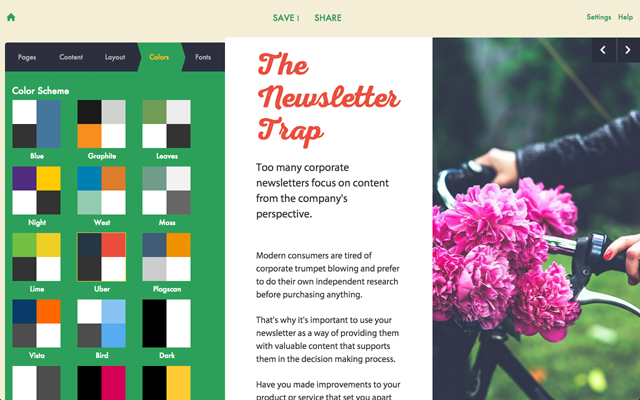 Have a collection of workouts and nutrition tips on your personal training blog? Turn them into a Summer fit guide ebook and offer it to your website visitors to get more leads for your personal training business.
What's the bottom line?
The Beacon plugin makes it impossibly easy to create high value ebooks from your blog posts to use as leads magnets for your website. Pick the posts you want to include, the theme, give it your personal touches and boom, a full-on ebook.

How are your lead generation initiatives going? Are your visitors signing up in droves or leaving without doing anything?
Would a plugin that increases leads and blog subscribers help you?
The Wishpond Popup plugin allows you to easily add action oriented popups to any page on your WordPress website:
Is a significant amount of traffic coming to your website and leaving without converting? An exit-intent popup can help capture a portion of that traffic.
Are you running a promotion on your website that everyone needs to know about? An entry popup will let all your visitors know right when they arrive.
Don't let your website visitors come and leave without trying to convert them into a lead or customer. Popups take care of the hard stuff by prompting action from your visitors.
What's the bottom line?
The Wishpond Popups WordPress plugin comes with 50 beautiful templates to start with and makes it easy to get a popup up and running on your WordPress site in minutes.
4. Instagram Feed
Bring a little colour and excitement to your WordPress website with the Instagram Feed plugin.
The Instagram Feed makes it easy to display a customized version of your Instagram gallery.
Add in a tiny shortcode to import your Instagram feed to a page or the sidebar of your website.
Customize your gallery's width, number of photos displayed, border, background colour, and more, to suite your website's look and feel.
What's the bottom line?
If you're actively marketing on Instagram this plugin will not only make your website more exciting but will increase your follower count by having your feed shown to desktop users.
5. Page Builder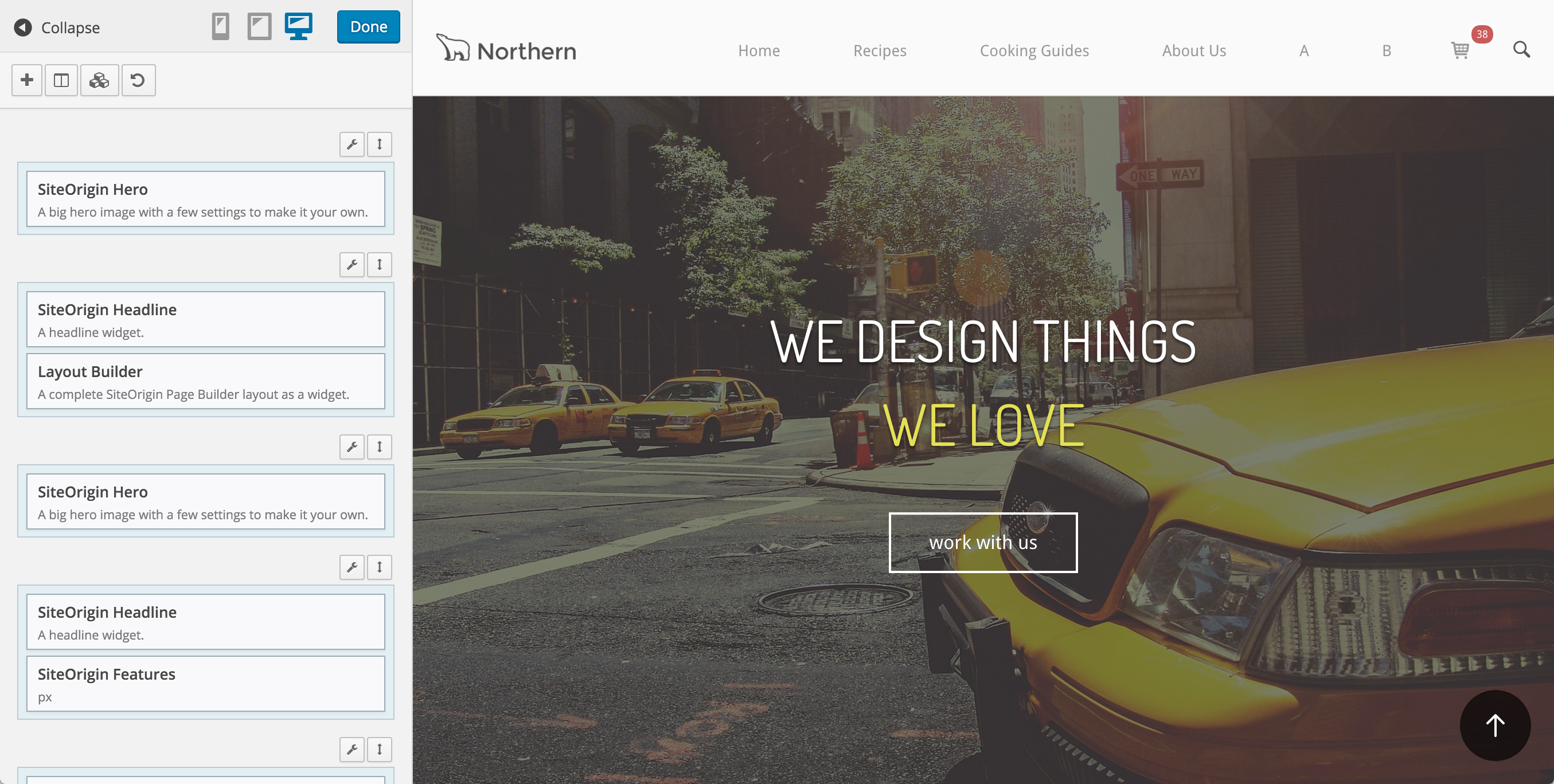
The Page Builder plugin is a godsend for users who want a little more customization for their WordPress page layouts.
Page Builder features a simple drag and drop editor that works with every type of theme.
You'll be able to quickly and easily build responsive, column-based pages on your WordPress website with Page Builder. It supports live-editing and support for the widgets you love to incorporate.
What's the bottom line?
If you have a specific image in your head about how you want your pages to look Page Builder will get you there — no coding required.
6. Google XML Sitemaps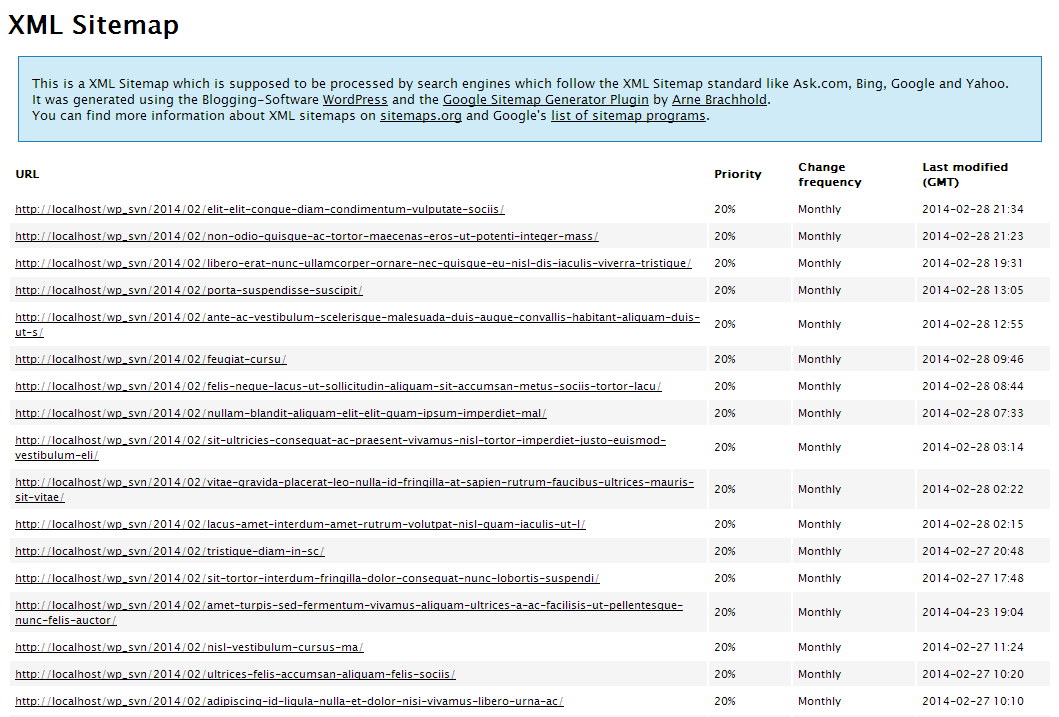
The Google XML Sitemaps plugin does exactly what you think it does: it creates XML sitemaps in an instant for your WordPress website.
A XML sitemap is a map of the entire link structure of your website. Having one in your website's directory is an instant SEO-booster that makes it easier for search engines like Google to index your website.
What's the bottom line?
There isn't that much more to it honestly. Simply install the Google XML Sitemap plugin and give your WordPress website a quick little SEO boost.
7. BackUpWordPress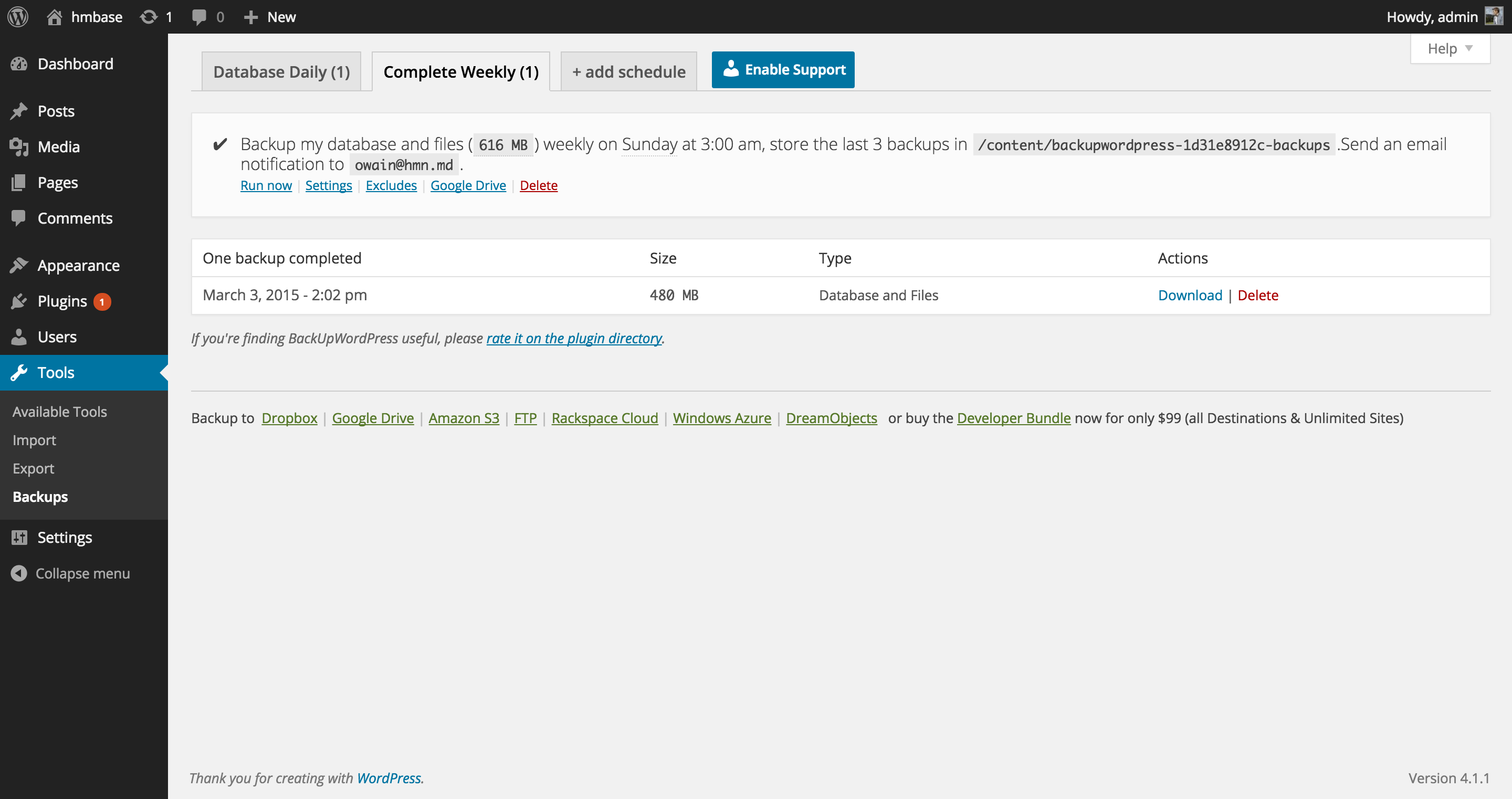
The BackUpWordPress plugin is one of those plugins that fits into the "I should have installed it" category.
BackUpWordPress will backup your entire WordPress website and files according to an automatic schedule that you set. This means that if your website crashes or you mess up on a piece of code you'll be able to go back and restore your website to all its glory.
What's the bottom line?
It's really a no-brainer, every website owner should backup their data periodically to avoid any sort of epic disaster in the future. Come back and thank me when everything hits the fan...
8. Rename wp-login.phpThis is a plugin for you security-fiends out there. Rename wp-login.php is a tiny plugin that allows you to easily and safely change the login address of your WordPress website.
Typically all WordPress users login to their websites at [domainname].com/wp-login.php. The Rename plugin redirects that address to one of your choosing so that no one else can find it — unless you want them to.
What's the bottom line?
The Rename plugin is an interesting little plugin for those looking to add a bit more security and customization to their WordPress website… just make sure you don't forget what you changed the address to.
9. P3 Plugin Performance Profiler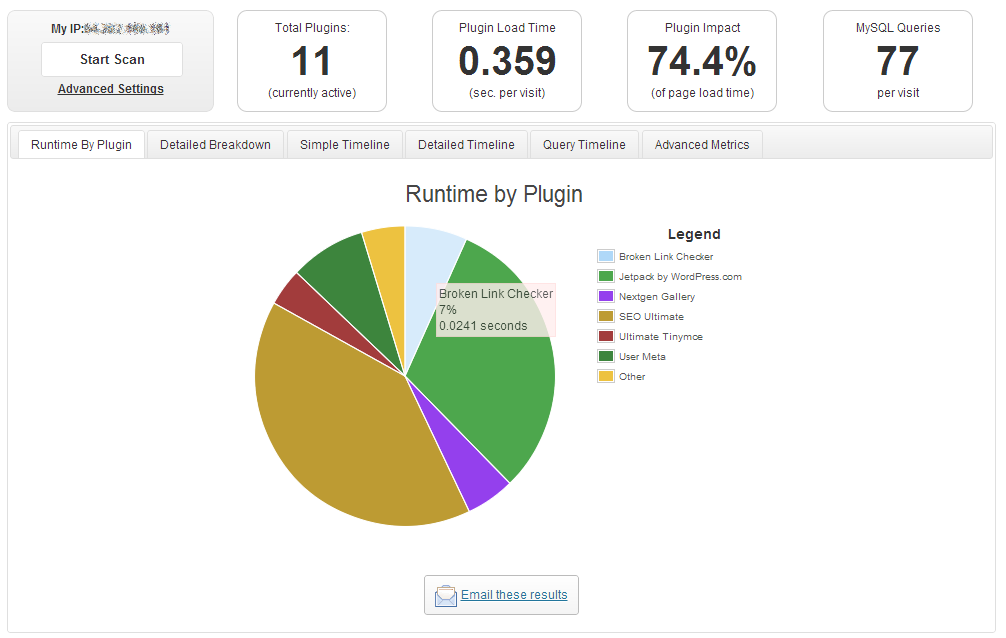
Since we're talking about the best plugins, how about a plugin that helps you manage all your plugins (so meta!).
The P3 Plugin Performance Profiler monitors the performance of your plugins by measuring the effect they have on your website's load times.
If you have any plugins, new or old, that may be affecting your page's load times you'll be able to see which one is the culprit.
What's the bottom line?
Want to try a new plugin but not sure how it will affect your website?
Use the P3 plugin to test new plugins on your website and see if it slows down the experience for your visitors.
10. Wishpond Landing Pages Builder
The Wishpond landing pages builder plugin transfers all the great stuff about the Wishpond landing page builder to WordPress. It allows users to easily build, publish, and A/B test beautiful landing pages for their WordPress website.
At Wishpond we talk a lot about the importance of using dedicated landing pages for all your marketing and promotion for a good reason: they get results.
Landing pages have become a basic necessity for marketers looking to get the maximum return on investment for their marketing and advertising efforts. Landing pages are proven to increase conversion rates because they're built with only one conversion goal in mind.
What's the bottom line?
The Wishpond Landing Pages Builder plugin will have you building awesome pages in minutes AND allow you to A/B test multiple versions to see which ones perform best. It is the complete landing page building tool for WordPress users, give it a try today.
11. Google Analytics
This is another "must-have" tool for all WordPress users in my opinion.
Instead of heading to the Google Analytics website and logging in to see all of your data you can use the Google Analytics WordPress plugin to import all that important stuff right to your WordPress dashboard.
It gets better, the Google Analytics plugin makes it easy to set up and place all of your javascript tracking codes on all of your pages. No more manually placing your tracking code on all of your webpages.
What's the bottom line?
Simplify your tracking and spend your time making sense of all your data with the Google Analytics plugin.
12. Relevanssi
One part of the standard WordPress platform that desperately needs some supercharging is its search function. That's where the Relevanssi plugin comes in.
The Relevanssi plugin replaces the standard WordPress search with a powerful search engine that has plenty of features and configurations. It provides search results that are organized in a format and style similar to the Google search results page but for the content on your own website.
What's the bottom line?
Your users will thank you for the advanced search results Relevanssi provides and you may even find that more of your content is being discovered and read. Head to the Relevanssi plugin page here for a full list of its many features.
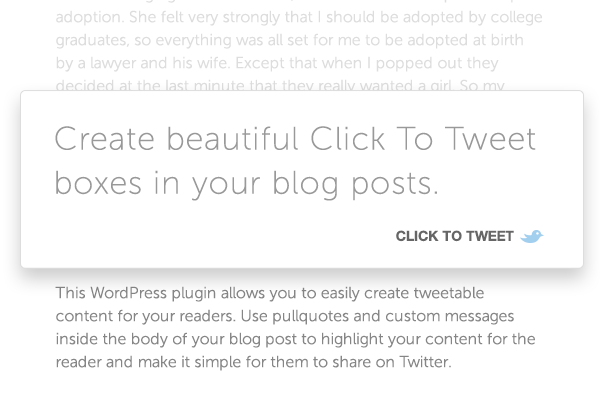
Forget the days of manually creating specific click to tweets and embedding them throughout your content. Easily highlight the shareable content you create with the Click To Tweet WordPress plugin.
What's the bottom line?
The Click To Tweet plugin skips all the grunt work and creates beautiful Click To Tweet boxes right in your blog posts. Create, highlight, and post in an instant and have more of your content shared on Twitter — it's really that easy with the Click To Tweet plugin.
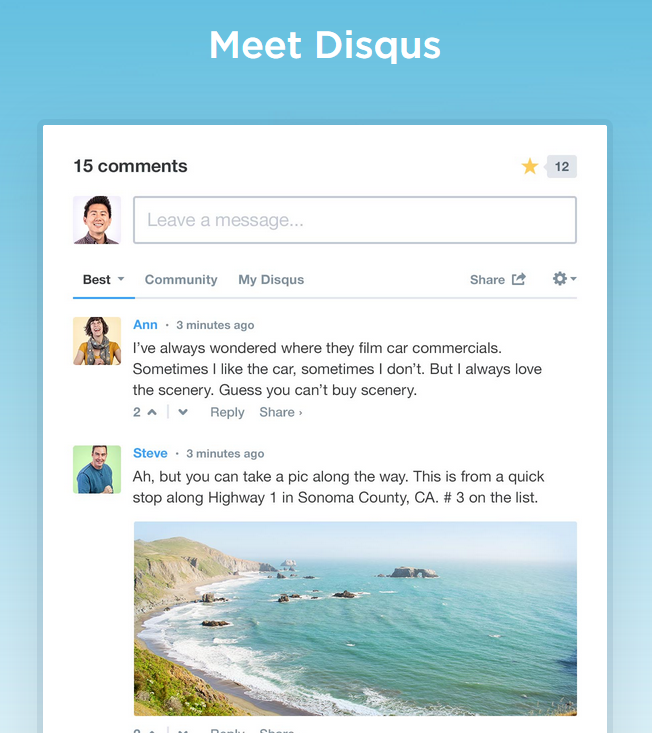
The Disqus comment system is one of the most widely used comment systems on the internet and the Disqus plugin makes it available to all WordPress users.
The Disqus plugin works by adding the powerful Disqus comment system to all of the blog posts you create. While the standard WordPress comment system does its job fine, Disqus takes it to the next level by having features like user profiles and a more advanced comment-spam blocker (death to comment spam!).
One indicator of shareable and engaging blog content is the number of comments a blog post has. The more discussion, the better the chance for virality. Where Disqus truly shines is its ability to make the experience of leaving comments quick and easy for your visitors.
What's the bottom line?
Use the Disqus plugin to build your community and start engaging in meaningful conversations with your audience.
15. Yoast SEO
How well are you monitoring your website's search engine optimization (SEO)?
If your answer was "not very well" or "what is SEO?" then this plugin is for you.
Search engine optimization is a requirement for any website on the internet no if, ands, or buts.
If you'd like your website to be in the good graces of the internet's all-knowing overlord, Google, then you need to make sure your website is as SEO friendly as possible.
The Yoast SEO plugin will make your life easier by showing you whether or not each piece of content you create on your website is SEO friendly.
It will comb over each blog post and page and give you a checklist of what you can improve so that Google can discover it.
Some of the killer features Yoast SEO has are:
What's the bottom line?
The Yoast SEO plugin takes all the guesswork out of SEO and lays everything out in an easy to understand format thus helping you improve your website's visibility.
16. Yet Another Related Post Plugin (YARPP) One way to decrease your bounce rate — the amount of people who visit your website and leave after viewing only one page — is to persuade your visitors to continue reading more of your content.
A low bounce rate tells Google that people are finding what they're looking for on your website and sticking around for more.
So how can you lower your bounce rate you ask?
The answer is as simple as suggesting related content. Sure you could manually plug in related content at the bottom every time you write a new post but you're a busy person. Who has time for that??
The YARPP algorithm suggests content to your readers based on whatever you choose — post titles, tags, categories, or custom taxonomies. Once a reader is finished they can move on to another post suggested by YARPP based on what they've just read.
What's the bottom line?
The Yet Another Related Post Plugin or YARPP was created to make the life of content writers easier by automatically suggesting related content to readers.
Bonus: The pro version of YARPP allows users to make money by allowing native ads from third-party publishers to be placed in the recommended suggestions. This could be an additional source of income for owners of high-traffic websites. Every click a sponsored ad receives on your page is money in the bank.
Plugging In The PiecesIf you're just starting your online journey with a WordPress website definitely consider playing around with a few plugins to see what they're capable of.
These plugins are meant to improve the performance of your website and create a better experience for your visitors. The better their experience is, the better off you are.
The WordPress plugins that I recommended were:
WordPress is the undisputed champion of content management systems and the right plugins only make WordPress better. Try a few of these 16 impossibly awesome WordPress plugins and supercharge your website today.
Do you have a WordPress website?
What are the plugins you can't live without?
Leave a comment below and let me know your favourites!
Source: 16 Impossibly Awesome WordPress Plugins That Will Supercharge Your Website